Andries Janse van Vuuren
Survival in the face of danger
18 september 2026
Wageningen University
Open Ebook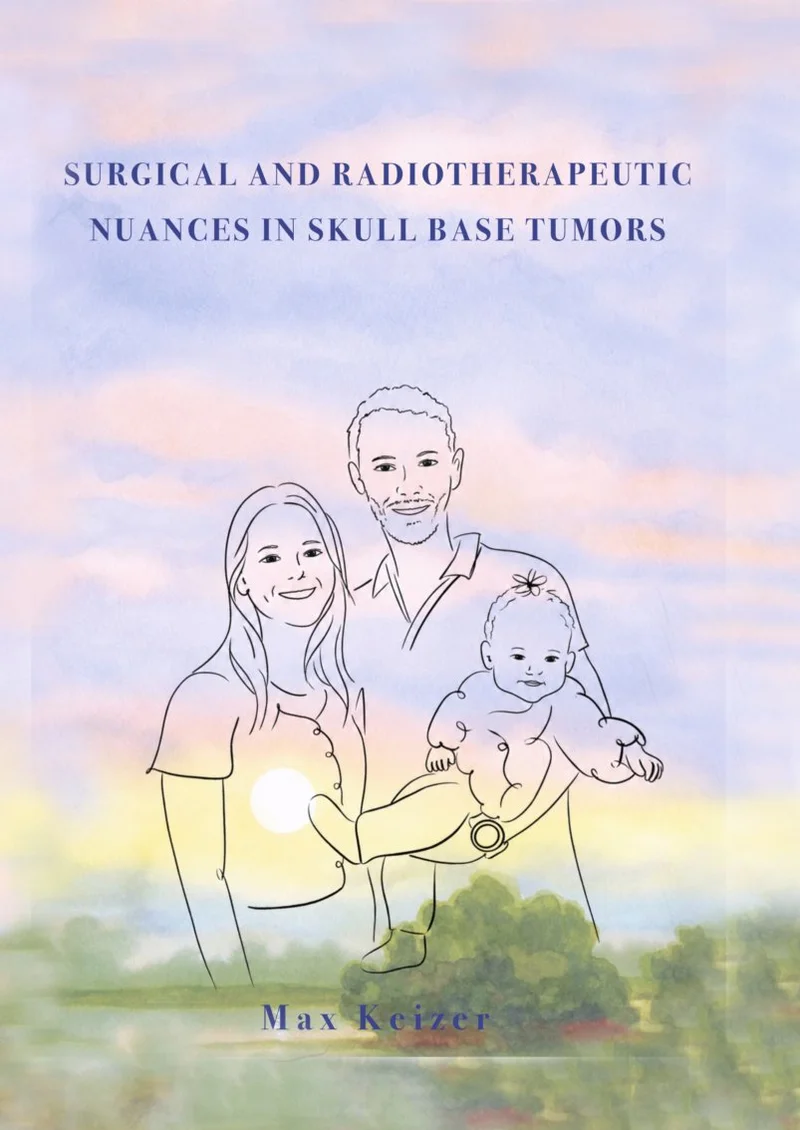
Share this project
Summary
SUMMARY
This thesis describes the experience of our center regarding the treatment of skull base tumors. Skull base tumors are complex, often involved in critical neurovascular structures and leading to substantial health and psychosocial related burden. Treatment is often multidisciplinary and requires experienced skull base dedicated teams to offer optimized management. Treatment may consist of surgical resection, radiotherapy, systemic therapies or a combination. Tumors may be benign or highly malignant and treatment goals may differ between pathologies and patients. This thesis addresses the challenges faced in the treatment of chordoma, vestibular schwannoma, chondrosarcoma and sinonasal cancer.
In chapter 2 I present our results on the combined approach to treating large Koos IV vestibular schwannoma. It combines a planned partial resection followed by Gamma Knife radiotherapy. Primary outcome is local tumor control and secondly; treatment toleration. This chapter describes excellent tumor control and functional outcome after a combined surgical and radiotherapeutic treatment for large vestibular schwannoma.
In chapter 3 I present the treatment outcome of patients with cranially extended sinonasal carcinoma. These rare tumors are typically treated using radical resection followed by high dose radiotherapy. It portrays the results of this treatment on tumor control and adverse effects. The chapter concludes that aggressive treatment may lead to prolonged survival, but it often comes at a cost regarding complications and decrease in functional outcome.
Chapter 4 depicts our experience of treating skull base chordoma. This rare and locally aggressive malignancy proves a fierce opponent in many skull base practices. The goal of this study was to evaluate the survival rates in our cohort and compare open vs endoscopic approaches. It additionally describes treatment complications and results of salvage therapies. The chapter concludes that long term survival may not be dependent on early local tumor control failure and salvage therapy may adequately prolong overall survival.
Chapter 5 presents the current evidence on the added value of radiotherapy in the treatment of skull base chondrosarcoma. It depicts the lack of high-quality data, but it may indicate a positive effect on progression free survival when applying particle therapy. This review may guide future decision making for clinicians and demonstrates knowledge gaps for future research endeavors.
Chapter 6 describes a patient with a clival lesion presenting with paroxysmal abducens palsy. The tumor demonstrates growth and regression coupled with the patient’s symptoms. Histopathology shows a chordoma. This case illustrates the importance of pathological confirmation in uncertain radiological cases, which could aid colleagues in decision making.
The evolution of skull base surgery, as is elaborated on in the previous paragraph, is a continuous process. The goal of decreased morbidity and improved recovery after surgery is always demanding. In our center we developed a simple and rapid technique to close small clival defects without the need for vascularized flaps. In chapter 7 this is presented in a case series. The aim is to provide surgeons with different options for skull base closure techniques.
In conclusion this thesis describes the various challenges faced in treating complex skull base tumors. Delineating the fine line between curation and neurological preservation and portraying the evolution the specialty has underwent in the last few decades. Future endeavors must focus on further improving individual patient care and exploring tumor behavior both biologically and radiologically.