
Maxim Hoekmeijer Test
Beyond diagnostic boundaries
27 juni 2025
Protected: Maxim Hoekmeijer Test
Rijksuniversiteit Groningen
Open Ebook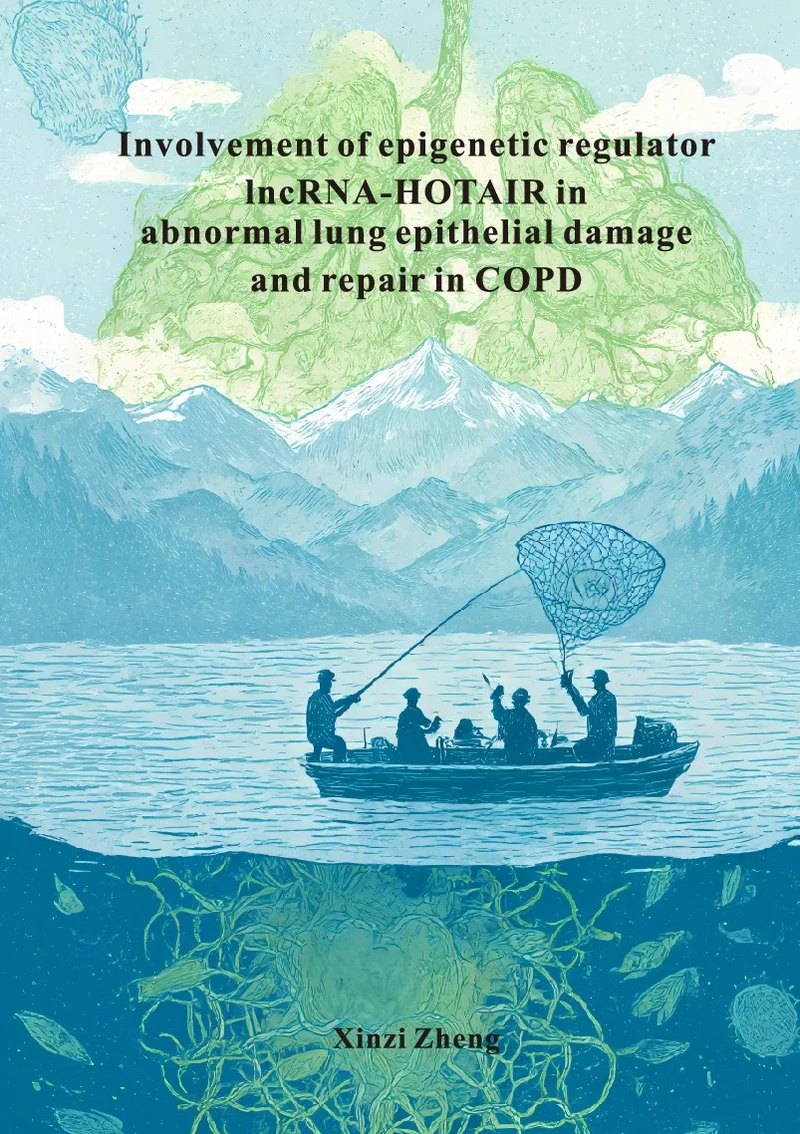
Share this project
Summary
Chronic obstructive pulmonary disease (COPD) represents a major global health burden characterized by irreversible airflow limitation and systemic manifestations, with current therapies primarily providing symptomatic management without altering disease progression. This study sought to identify novel molecular mechanisms and therapeutic targets within airway epithelial cells, thereby advancing pathophysiological understanding and treatment strategies for COPD. As described in the general introduction of this thesis, airway epithelial cells are the first line of defense against environmental insults (e.g. cigarette smoking, bacteria, viruses, pollutants) in the lung, allowing the integrity of airway epithelium, orchestrating immune responses, and maintaining homeostatic regulation. Disrupted epithelial barrier function has been observed upon cigarette smoking and in COPD, and this may lead to increased pro-inflammatory activity as well as airway remodeling processes. Cigarette smoke (CS) exposure has been established as the principal etiological factor in COPD pathogenesis, inducing epigenetic modifications such as aberrant DNA methylation and dysregulation of non-coding RNA expression. The long non-coding RNA HOTAIR, a trans-acting epigenetic regulator, mediates transcriptional silencing through coordinated interactions with Polycomb Repressive Complex 2 (PRC2) and Lysine-specific demethylase 1 (LSD1), a mechanism implicated in smoking-induced pathologies as lung cancer but underexplored in COPD. In addition, HOTAIR has been reported to drive epithelial-mesenchymal transition (EMT) in human malignancy, a process that has also been linked to airway remodeling in COPD. Notably, HOTAIR regulates E-cadherin expression. Localization of the E-cadherin protein to the adherens junction is a cornerstone of epithelial junctional integrity, loss of which has been implicated in malignant transformation. The loss of epithelial barrier function is recapitulated in cultured airway epithelial cells derived from patients with COPD through observed reductions in junctional protein expression E-cadherin and epithelial resistance, suggesting that the cigarette smoke-induced increase in HOTAIR could also contribute to destabilization of epithelial barrier function. In this thesis, we therefore aimed to study the functional role of HOTAIR in airway epithelial barrier dysfunction, dysregulated repair mechanisms and pro-inflammatory responses, as well as mitochondrial dysfunction, which has been observed in COPD and in which HOTAIR has also been implicated, thereby elucidating its potential mechanistic involvement in COPD pathogenesis.
In Chapter 2, we hypothesized that in airway epithelial cells, loss of E-cadherin leads to a more vulnerable phenotype, associated with disrupted junctions, impaired repair and a pro-inflammatory phenotype upon exposure to CS extract (CSE). CRISPR-Cas9-engineered E-cadherin heterologous knockdown 16HBE (CDH+/-) cells and primary airway epithelial cells (AECs) obtained from control and COPD subjects were used in our study. Our data revealed that E-cadherin loss in 16HBE cells results in lower barrier formation and disrupted ZO-1 expression, confirming its essential role of E-cadherin in the maintenance of epithelial barrier integrity. Moreover, E-cadherin loss resulted in aggravated CSE-induced barrier dysregulation, characterized by stronger damage caused by CSE and delayed restoration of the damaged barrier compared to wild-type CDH1+/+ cells. Additionally, we showed that E-cadherin is involved in impaired epithelial repair upon wounding. In CDH1+/+ cells, wounding caused a rapid and drastic decline in epithelial barrier function, but epithelial cells could recover within 3-4 hrs. 16HBE CDH+/- cells showed a delay in the recovery of the monolayer as observed by a delay in the stabilization of the high-frequency capacitance as well as an impairment in the stabilization of low-frequency resistance, reflective of impaired recovery of cell-cell contacts after wounding. Furthermore, our data demonstrate that loss of E-cadherin expression leads to a more pro-inflammatory phenotype, with increased CXCL8 and IL-1α production, even in the absence of CSE. We also observed that loss of E-cadherin aggravates the susceptibility to pro-inflammatory responses to CSE. Our data show that CSE exposure resulted in a significant increase in IL-1α release in CDH1+/- but not in CDH1+/+. Finally, we recapitulated our observations in COPD-derived AECs, exhibiting lower expression of E-cadherin and ZO-1, accompanied by a CSE-induced increase in IL1A expression.
In Chapter 3, we hypothesized that HOTAIR may be dysregulated in the airway epithelium of patients with COPD, resulting in chromatin alterations, contributing to a pro-inflammatory airway epithelial phenotype and a less favorable outcome of disease. First, we took advantage of the Cancer Genome Atlas (TCGA) database (https://www.cbioportal.org), showing that high HOTAIR expression is associated with poor overall survival in patients with lung cancer in combination with COPD, compared to lung cancer alone. This suggests that high HOTAIR expression may specifically lead to a poor prognosis for lung cancer patients when these also have COPD. Next, we assessed whether HOTAIR expression is differentially expressed in airway epithelial cells (AECs) from COPD patients compared to non-COPD controls in the absence and presence of CSE. We did not observe significant differences in HOTAIR expression at baseline between AECs from non-COPD controls and COPD patients, irrespective of whether these were obtained from tracheobronchial tissue or bronchial brushings. However, we only observed a significant upregulation of HOTAIR expression upon CSE exposure in the tracheobronchial AECs and bronchial brushings (matched for age and smoking status) obtained from COPD patients but not in those from non-COPD controls, suggesting that the CSE-induced increase in HOTAIR is specific for COPD. Furthermore, we assessed whether CSE-induced increase in HOTAIR is related to the differences in its regulation of histone methylation patterns in AECs from non-COPD controls and patients with COPD. Our data indicate that there were no significant differences in H3K27me3 and H3K4me3 levels between the two groups at baseline, but CSE induced a significant decrease in H3K4me3 levels in COPD-derived AECs, but not in those of non-COPD controls. This indicates that CSE increases HOTAIR binding to LSD1 particularly in COPD-derived epithelium. Next, we studied the effect of interference with HOTAIR activity using its functional inhibitor AQB. We observed that AQB specifically disrupts the binding of HOTAIR-EZH2, leading to a significant decrease in H3K27me3, and this decrease was even stronger in control compared to COPD-derived AECs. In contrast, AQB decreased H3K4me3 levels in the presence of CSE both in control and COPD-derived AECs, indicating that it enhances the binding of HOTAIR to LSD1. Finally, we investigated the role of HOTAIR in CSE-induced pro-inflammatory responses in AECs by assessing the effects AQB treatment. We did not observe a significant effect of AQB on the mRNA and protein levels of GM-CSF and CXCL8 in non-COPD control and COPD-derived AECs at baseline. Interestingly, AQB treatment significantly decreased CSE-induced GM-CSF and CXCL8 production in control-derived AECs, not COPD-derived AECs. Together, these results indicate that the upregulation of HOTAIR expression in airway epithelium from COPD patients upon smoke exposure may result in stronger binding to the LSD1 complex, thereby suppressing the expression of anti-inflammatory genes and increasing pro-inflammatory responses. This may contribute to a more pathological phenotype.
In Chapter 4, we hypothesized that dysregulated HOTAIR expression may be involved in mitochondrial abnormalities in the airway epithelium of patients with COPD and may lead to disrupted mitophagy with accumulation of damaged mitochondria, since this has been described as one of the mechanisms contributing to aberrant epithelial responses to cigarette smoking in COPD. First, we compared mitochondrial respiration between control and COPD-derived AECs and observed a significantly lower oxygen consumption in COPD-derived AECs compared to controls. Next, we explored whether HOTAIR is involved in mitochondrial dysfunction in AECs from COPD patients. Our data revealed that HOTAIR inhibitor AQB significantly increased mitochondrial respiration in both control and COPD-derived AECs. In addition, AQB significantly attenuated the CSE-induced decrease in mitochondrial respiration, indicating that HOTAIR impairs mitochondrial function. Next, we assessed expression of the mitophagy-associated genes PINK1 and PARK2 in AECs from control and COPD subjects. We did not observe significant differences in PINK1 and PARK2 expression between control and COPD-derived AECs at baseline. In the presence of CSE, PINK1 expression was significantly upregulated and PARK2 expression significantly downregulated in AECs from both control and COPD subjects. Of note, we observed a trend toward a stronger decrease in CSE-induced PARK2 expression in COPD-derived AECs compared to control-derived AECs. AQB attenuated the CSE-induced increase in PINK1 in COPD-derived AECs. Additionally, the treatment with AQB enhanced LC3BII expression in the presence of CSE in control and COPD-derived AECs, indicative of more autophagy/mitophagy. Lastly, our results show that AQB was able to significantly attenuate CSE-induced increase in oxidative stress marker CDKN1A in COPD-derived AECs, but not those from control. Together, our findings suggest that HOTAIR contributes to CSE-induced mitochondrial dysfunction and impaired mitophagy, the latter particularly in airway epithelial cells from COPD patients.
In Chapter 5, we hypothesized that CSE-induced changes in FOXM1 and FOXA1, transcription factors involved in the regulation of epithelial regenerative responses, are responsible for higher HOTAIR expression upon exposure to cigarette smoke. In addition, we hypothesized that HOTAIR facilitates abnormal CSE-induced epithelial repair processes and airway/alveolar epithelial cell differentiation, implicated in the progression of COPD. We first investigated the potential regulatory influence of transcriptional factor FOXM1 and FOXA1 on HOTAIR expression in COPD-derived AECs. Our data revealed that FOXM1 and FOXA1, being downregulated and upregulated by CSE respectively, act as negative regulators of HOTAIR expression in COPD-derived AECs. Next, our data demonstrate that HOTAIR knockdown aggravated CSE-induced epithelial barrier dysfunction in Calu-3 epithelial cells. More specifically, our data revealed that upon HOTAIR knockdown, the cells build significantly lower electrical resistance. Upon CSE-induced epithelial barrier dysfunction, cells undergoing HOTAIR knockdown exhibited an inability to restore barrier function and even demonstrated detachment from the substrate. This was accompanied by a significant downregulation in mRNA expression of CDH1 and TJP1 at baseline and in the presence of CSE, and a significant reduction in ZO-1 expression following exposure to CSE. In addition, treatment with AQB resulted in similar effects regarding to the regulation of barrier function. Moreover, AQB significantly decreased the expression of CDH1 and TJP1 in COPD-derived AECs, but not in those from control subjects. Since we observed in chapter 2 that treatment with AQB resulted in decreased H3K4 methylation in the presence of CSE, increased binding of HOTAIR to the LSD1 complex upon treatment with AQB may be involved in the dysregulation of airway epithelial junctional gene expression in COPD. Moreover, we explored the role of HOTAIR in the regulation of mucin-related markers MUC5AC and MUC5B in Calu-3 cells and air-liquid interface differentiated airway epithelial cells from COPD patients. CSE exposure significantly increased the expression of MUC5AC in Calu-3 cells, which was further increased upon HOTAIR knockdown. This effect was also shown at baseline. Similarly, treatment with AQB increased MUC5AC and MUC5B in mucociliary-differentiated AECs from control and COPD-derived AECs. Lastly, we used an ex vivo murine precision-cut lung slice (PCLS) model to validate our findings observed in vitro. While CSE exposure did not significantly change the expression of airway epithelial differentiation markers and junctional genes, our data revealed that AQB treatment reduced Cdh1 expression at baseline, but had no significant effect on Tjp1 and mucin marker Muc5ac and Muc5b expression either at baseline nor in the presence of CSE. In addition, we assessed alveolar epithelial type I and type II marker expression in response to AQB both under baseline and CSE-exposed conditions. Our data indicate that AQB treatment significantly downregulates the expression of the type I markers Aqp5 and Rage, irrespective of CSE exposure, which was not observed for T1α expression. Meanwhile, we observed a similar effect of AQB on alveolar type II marker Spc, which exhibited decreased expression following AQB treatment in the absence or presence of CSE. These data indicate that either inhibition of HOTAIR binding to EZH2 or its increased binding to LSD1 in response to AQB treatment may not only suppress junctional markers in airway epithelial cells, but may also result in increased expression of mucins and reduced expression of alveolar epithelial markers.
Collectively, our data suggest that especially the binding of HOTAIR to the LSD1 complex, which is promoted by CSE exposure in COPD-derived airway epithelial cells, may lead to detrimental effects, with dysregulated pro-inflammatory responses, reduced expression of junctional markers and increased expression of MUC5AC and MUC5B. This may thus contribute to a more pathological phenotype of airway epithelial cells. In addition, we speculate that HOTAIR binding to EZH2 may be detrimental for mitochondrial function, and that treatment with AQB therefore improves mitochondrial function in epithelial cells from both COPD patients and controls.
Protected: Maxim Hoekmeijer Test