Maxim Hoekmeijer Test
Beyond diagnostic boundaries
27 juni 2025
Protected: Maxim Hoekmeijer Test
Rijksuniversiteit Groningen
Open Ebook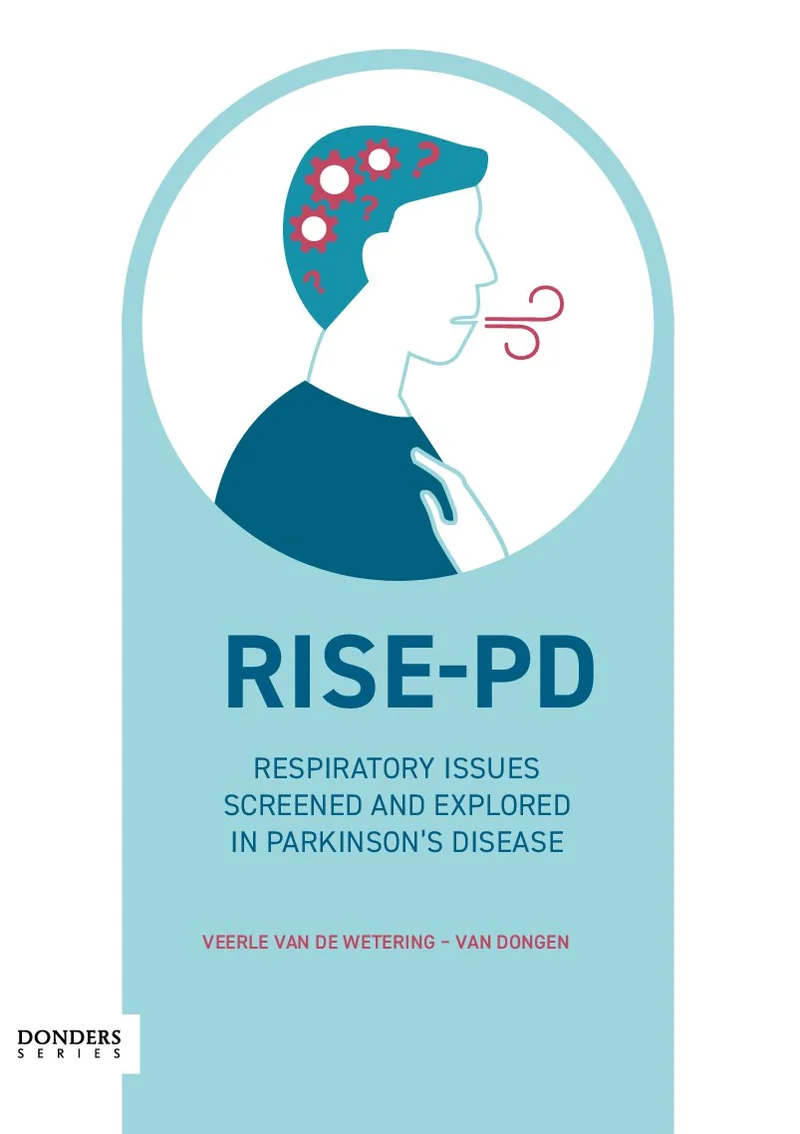
Share this project
Summary
In general, the way we are breathing happens automatically. So, we do not have to think about how we need to take a breath. Knowing that people with Parkinson’s disease experience difficulties in the performance of automatic movements such as walking, the question arises to what extent such difficulties could also be present in other automatically generated movement patterns such as respiration? The presence of respiratory symptoms has already been described by James Parkinson in 1817 by phrasing it as “he fetched his breath rather hard”. Despite this very early recognition by James Parkinson and the known late stage complications such as pneumonia, the importance of respiratory symptoms is currently underestimated. Abnormal respiratory function tests in people with Parkinson’s disease have been described in the literature over the last two decades. However, key questions remain: which respiratory symptoms do people with Parkinson’s disease experience, what is the impact of these symptoms on their daily lives, how can we recognize respiratory dysfunction in a timely manner, and how should we treat it in clinical practice?
In this thesis, we aimed to improve recognition, understanding and treatment of respiratory dysfunction in people with Parkinson’s disease. To achieve these aims we first performed a qualitative study that helped us to better recognize and understand the experienced respiratory symptoms, and the impact of these symptoms on daily life. We complemented these findings by exploring the prevalence and participant-reported determinants of respiratory dysfunction in people with Parkinson’s disease. Finally, we evaluated the efficacy of respiratory training interventions on respiratory dysfunction.
Chapter 1 provides an illustrative background about the clinical presentation of Parkinson’s disease with a specific focus on (the measurement of) respiratory dysfunction. We elaborate on the treatment of respiratory dysfunction, focusing particularly on the therapeutic approach of respiratory dysfunction. Subsequently, we describe the infrastructure of multiprofessional network care for Parkinson’s disease (so called ParkinsonNet) which serves as an infrastructure to implement new knowledge about respiratory dysfunction in Parkinson’s disease, followed by an overview of the challenges concerning respiratory dysfunction in Parkinson’s disease.
Our first research aim, presented in Chapter 2, was to better understand respiratory dysfunction and its impact on daily life and social participation from the perspectives and experiences of people with Parkinson’s disease. This qualitative study used a grounded theory approach which resulted in a conceptual model with four profiles of respiratory dysfunction and their consequences.
• Profile 1: Loss of automatic breathing.
• Profile 2: Episodes of breathlessness or rapid, shallow breathing triggered by physical exertion, fatigue, postural deformities, stress, or anxiety.
• Profile 3: Stress and anxiety triggered episodes of breathlessness.
• Profile 4: Decreased cough strength and more frequent coughing.
This study showed that the impact of respiratory dysfunction is considerable as it leads to discomfort, participation limitations, and avoidance of social activities.
Building on that conceptual model, Chapter 3 describes our cross-sectional study of 939 people with Parkinson’s disease. We used a six-item questionnaire to identify two internally consistent subdomains of respiratory dysfunction:
• Dyspnea (any difficulty with breathing), including breathing difficulties, breathlessness, shortness of breath.
• Dystussia (any difficulty with coughing), including chest tightening, frequent throat clearing, and the need to cough often.
We found that 44.3% of participants experienced respiratory dysfunction. Determinants independently associated with dyspnea were female sex, higher BMI, longer disease duration, greater self-reported rigidity, previous pulmonary disease(s), and anxiety. Participant-reported determinants independently associated with dystussia were previous pulmonary disease(s), COVID-19 symptoms, swallowing complaints, and speech complaints. Assessing dyspnea, dystussia, and their determinants may facilitate early recognition of respiratory dysfunction, enabling timely treatment and potentially limiting participation problems and preventing or delaying late-stage complications such as pneumonia.
The third aim was to optimize treatment of respiratory dysfunction. Pharmacological treatment of respiratory dysfunction in terms of dopaminergic medication appears to be effective at least in the early phases of Parkinson’s disease. Although, the results seem to be dependent on the duration and severity of the disease, in some people with Parkinson’s disease adverse effects of dopaminergic medication may arise as well. Chapter 4 discusses these adverse effects, as we evaluate three people with Parkinson’s disease who reported episodes of breathlessness in the “before on-state” and “before off-state,” suggesting a biphasic respiratory dysfunction. We measured changes in respiratory muscle function before and after the best therapeutic response to levodopa and showed that episodes of breathlessness were accompanied by reduced respiratory function tests. This biphasic levodopa-related complication underlines that clinical management should also include the evaluation of dopaminergic medication taking respiratory function into account.
Over the last decade, evidence for respiratory training interventions in Parkinson’s disease has grown. Chapter 5 presents a systematic review of six papers. Our two main findings are:
1. Expiratory muscle strength training (EMST) significantly improves swallowing safety and phonatory aspects and, when combined with air stacking, also improves coughing (large effect sizes; moderate level of evidence).
2. Inspiratory muscle strength training (IMST) improves phonatory aspects (large effect sizes; moderate level of evidence).
We concluded that respiratory training should be considered for people with Parkinson’s disease who experience respiratory dysfunction.
In Chapter 6, we discuss our main findings, reflect on methodological considerations, and outline strategies and activities for implementing our findings into the current healthcare system. Key conclusions are:
1. Respiratory symptoms have impact on daily activities and social participation.
2. Respiratory dysfunction is prevalent - 44.3% of 939 participants experienced dyspnea or dystussia.
3. Respiratory dysfunction comprises two main features: dyspnea (breathlessness, rapid shallow breathing, loss of automatic breathing) and dystussia (decreased cough strength, more frequent coughing, related to speech and swallowing problems).
4. Stress and anxiety are major triggers for dyspnea.
5. Respiratory training interventions effectively reduce respiratory symptoms and improve respiratory function tests.
We have begun implementing these findings by raising awareness among people with Parkinson’s disease and healthcare providers. We also educated ParkinsonNet physiotherapists and speech-language therapists to:
• Expand knowledge of respiratory dysfunction in Parkinson’s disease.
• Enhance diagnostic skills for better recognition.
• Improve application of respiratory training interventions
• Disseminate expertise nationwide.
This thesis demonstrates that respiratory dysfunction is an important and prevalent feature of Parkinson’s disease and had impact on peoples’ lives. Dyspnea and dystussia are two distinct subdomains of respiratory dysfunction, and respiratory training interventions effectively improve respiratory function.
Protected: Maxim Hoekmeijer Test