
Maxim Hoekmeijer Test
Beyond diagnostic boundaries
27 juni 2025
Protected: Maxim Hoekmeijer Test
Rijksuniversiteit Groningen
Open Ebook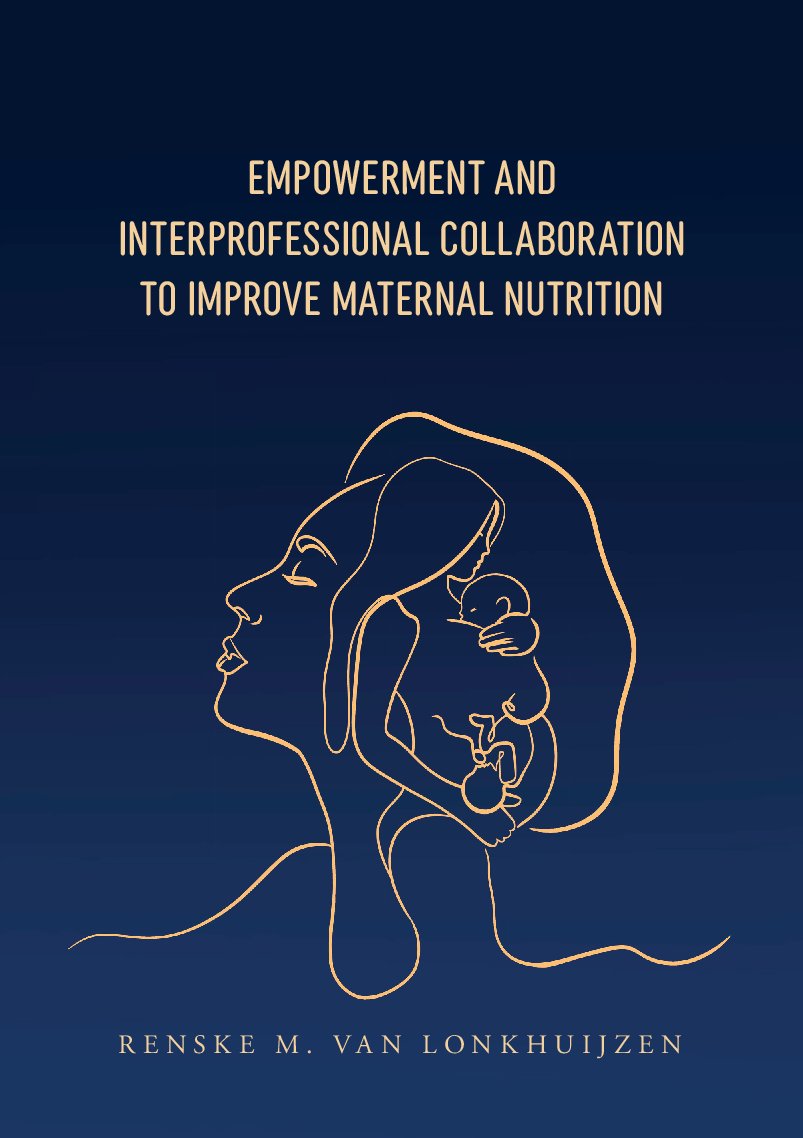
Share this project
Summary
This dissertation describes an interdisciplinary research project that integrates nutritional and social sciences to improve the diet quality of pregnant women. The central aim is to contribute to improved maternity care in the Netherlands by developing, implementing, and evaluating the ‘Power 4 a Healthy Pregnancy’ (P4HP) programme. Adequate prenatal nutrition is crucial for maternal health and optimal child development. While many pregnant women are motivated to improve their dietary patterns, they often encounter challenges such as nausea, food cravings, and a lack of tailored nutritional support.
This research is grounded in an empowerment approach that places women centrally in their care process. Unlike traditional educational methods, this approach recognises women as active participants rather than passive recipients of information. The project comprises three main components: the development of the P4HP programme, an evaluation of its implementation, and an exploration of additional factors influencing dietary behaviour during pregnancy and postpartum. Each phase employed a mixed-methods design, combining quantitative and qualitative research methods.
THE STUDY PROTOCOL OF THE P4HP PROGRAMME
Chapter 2 describes the study protocol for evaluating the P4HP programme. The programme distinguishes itself through four core principles: early intervention during pregnancy, repeated nutrition communication, a positive empowerment approach, and the collaborative involvement of midwives and dietitians. The programme consists of four additional consultations during pregnancy to discuss nutrition: three with a midwife and one with a dietitian. To support meaningful dialogue, a visual conversation tool was developed to enable women to steer discussions toward nutrition topics most relevant to their needs. The evaluation employed a mixed-methods approach, combining a cluster randomised controlled trial to assess effectiveness with comprehensive process evaluations. The process evaluation included surveys and in-depth interviews with pregnant women and healthcare professionals (HCPs) to examine implementation experiences, facilitators, and barriers.
EFFECTIVENESS OF THE P4HP PROGRAMME
Chapter 3 presents the results of the cluster-randomised controlled trial evaluating the P4HP programme. The study included 342 pregnant women from 16 midwifery practices in the Netherlands, with 186 women assigned to the intervention group and 156 to the control group. Both groups completed questionnaires at baseline (approximately week 11 of pregnancy) and post-intervention (approximately week 34). The results show that diet quality significantly improved in the P4HP group compared to the control group. Additionally, women in the P4HP group demonstrated increased knowledge about appropriate gestational weight gain, although no significant differences were found in other empowerment measures and health outcomes.
Chapter 4 explores pregnant women’s experiences with the P4HP programme through interviews with 22 women. Participants reported various dietary improvements, including increased consumption of dairy products, fish, fruits, vegetables, whole-grain bread, unsalted nuts, water, and supplements, and reduced intake of risky foods during pregnancy. Women particularly valued the personalised nutritional guidance from dietitians, which increased their awareness and boosted their confidence in making healthier dietary choices. Follow-up consultations with midwives helped women maintain these improvements by serving as ongoing motivational reminders throughout pregnancy. While most women saw their dietary choices as a personal responsibility, some acknowledged their partner’s role in sharing this responsibility.
Chapter 5 describes how HCPs experienced implementing the P4HP programme. Surveys (n=29) and interviews (n=36) revealed that HCPs noted improved understanding of each other’s roles in nutritional care and enhanced interprofessional collaboration. Midwives reported greater confidence in discussing nutrition and recognising cases where referring women to a dietitian would be beneficial. Similarly, dietitians gained a deeper understanding of the specific nutritional challenges women face at different stages of pregnancy. Key facilitators for successful implementation included clear procedures, flexibility in the programme’s execution, and professionals’ commitment to promoting healthy eating. However, several barriers were identified, including time constraints, limited staff availability among midwives, and the financial burden of dietitian consultations outside the research context. HCPs emphasised the importance of addressing the financial challenges related to out-of-pocket costs to ensure the successful integration of the P4HP programme into routine antenatal care.
In Chapter 6, the researchers reflected on the participatory development process of the P4HP programme. This process unfolded over four phases: exploratory research, iterative programme development, pilot implementation, and full-scale implementation and evaluation. The development process emphasised stakeholder engagement and sought to balance the standardisation of core elements with flexibility for local adaptation. The reflection was conducted through documentation on how the programme was developed and an examination of what worked well at each phase. This reflection revealed key lessons. First, it was crucial to involve all stakeholders from the beginning and keep them engaged throughout. Second, continuously and iteratively testing and refining the P4HP programme based on feedback improved its design. Third, the programme needed to be structured enough to maintain its core principles while being flexible enough to work in different practice settings.
ADDITIONAL FACTORS INFLUENCING MATERNAL NUTRITION
Chapter 7 investigates the role of partners in supporting pregnant women’s healthy diets through 16 couple interviews. Partners primarily provided instrumental support (e.g. cooking, grocery shopping, avoiding unsafe foods) and informational support (mainly concerning food safety), while emotional support was less frequently reported. The acceptance of support was influenced by how it was delivered. Support was more readily accepted when it was perceived as helpful, involved the partner in the process, and was expressed positively and non-judgmentally.
Chapter 8 explores current nutritional counselling practices during the postpartum period through surveys (n=69) and interviews (n=16) with HCPs. While 77% of professionals provided some form of postpartum nutritional counselling, this support was often limited to basic advice and typically provided only when explicitly requested. Most HCPs (80%) supported the development of a mobile health application to assist in providing nutritional guidance to postpartum women.
Chapter 9 examines the preconditions necessary for an empowerment strategy to improve diet quality among parents in the first year postpartum. The study identified that current healthcare systems prioritise child health over parental nutrition, with support largely reactive rather than preventive. While parents demonstrated strong motivation to maintain healthy dietary habits postpartum, they faced several barriers, including time constraints, competing priorities, and limited access to professional support.
GENERAL CONCLUSIONS AND RECOMMENDATIONS
Chapter 10 synthesises the findings from all preceding chapters. This analysis results in five critical insights:
1. The P4HP programme effectively improved the diet quality of pregnant women, with significant health benefits at both individual and population levels.
2. The empowerment approach went beyond simply transferring knowledge by supporting women in developing practical skills applicable to their daily lives. The programme was tailored to align with their circumstances, with consultations guided by women’s motivations and needs rather than predetermined curricula.
3. The collaboration between midwives and dietitians emerged as a key strength of the P4HP programme. Together, they provided more comprehensive support than either could deliver independently.
4. The social environment, particularly the involvement of partners, plays a significant role in shaping dietary choices during pregnancy. This underscores the importance of involving social networks in nutritional guidance.
5. While digital tools can be valuable, personal connections with healthcare providers remain irreplaceable. Future innovations should aim to combine technology with human contact.
Based on these insights, practical recommendations are proposed for Dutch maternity care. First, integrating empowerment approaches into nutritional guidance for pregnant women is essential. This approach enables healthcare providers to support women in building their capacity to make informed dietary choices. Second, strengthening interprofessional collaboration between midwives and dietitians is crucial, as it allows optimal use of their complementary expertise in providing comprehensive nutritional support. Lastly, developing a continuous care pathway that extends nutritional support from pregnancy into the postpartum period is recommended, addressing the unique challenges of the postpartum period more effectively.
For health policy, key recommendations include revising the funding for preventive care, which is necessary to promote a shift from reactive to proactive approaches, recognising the long-term benefits of investing in maternal nutrition. Also, eliminating out-of-pocket costs for pregnancy and postpartum-related dietitian consultations by including them in basic health insurance coverage would be a tangible step toward improving access to specialised nutritional care.
This dissertation highlights the critical importance of the first 1,000 days in establishing the foundations for lifelong health, with pregnancy serving as a unique opportunity for nutritional intervention. The research shows that when pregnant women are empowered and supported in making informed dietary choices, this leads to healthier eating patterns. The strength of the P4HP programme lies in the collaboration between midwives and dietitians, whose combined expertise provides more effective support than either could offer individually. The findings underscore that quality nutritional care during and after pregnancy benefits both mother and child. Involving partners and other close relations in nutritional guidance ensures more substantial support in daily practice. Additionally, the research indicates that personal contact between healthcare providers and women remains valuable, even as digital tools become more prevalent. This research advocates for continuous care beyond delivery, providing ongoing support for women during the challenging postpartum period. Investing in preventive nutritional care during this critical life stage establishes a solid foundation for the health of both current and future generations.
Protected: Maxim Hoekmeijer Test