

Maxim Hoekmeijer Test
Beyond diagnostic boundaries
27 juni 2025
Protected: Maxim Hoekmeijer Test
Rijksuniversiteit Groningen
Open Ebook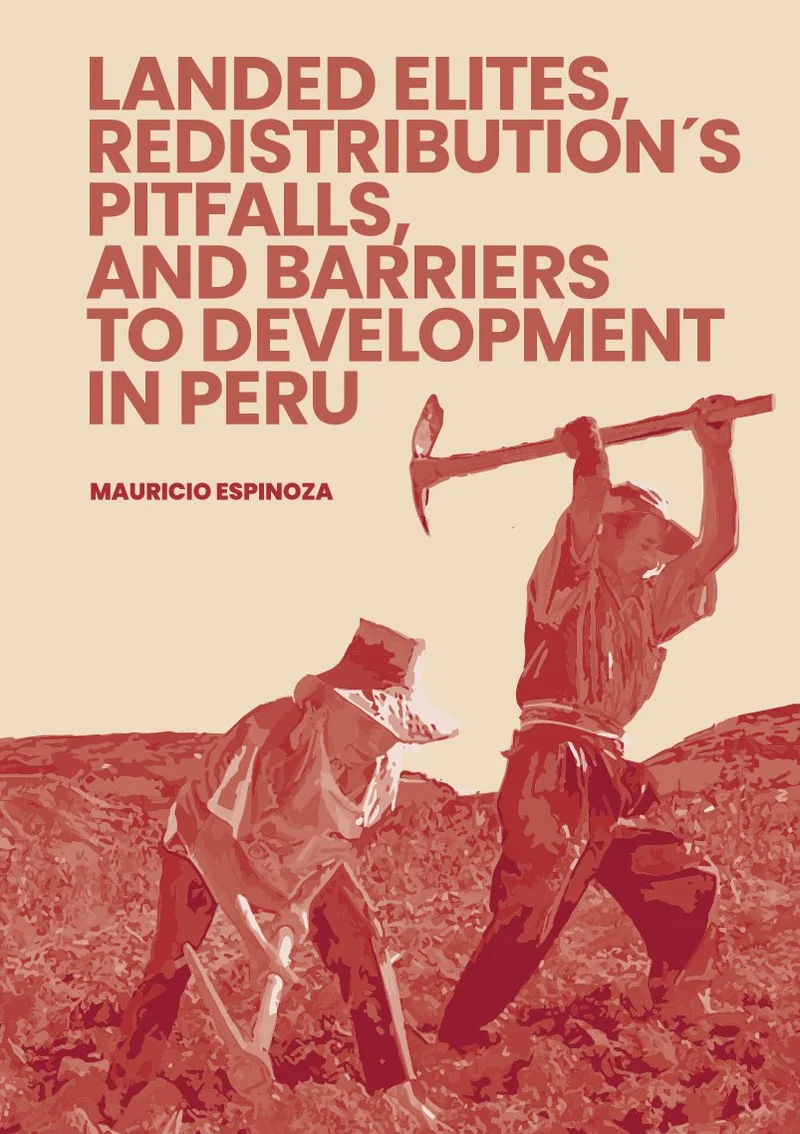
Share this project
Summary
Why do some regions remain persistently unequal and underdeveloped, even after the end of colonial rule or the implementation of redistributive reforms? This dissertation explores the long-run consequences of agrarian institutions—both their origins and their attempted transformations—on human capital and productivity in Peru. It focuses on the enduring role of landed elite institutions and the unintended outcomes of a sweeping land reform, contributing to broader debates on inequality, institutional persistence, and the political economy of development.
This thesis is structured around three interrelated empirical chapters (Chapters 2–4), each formatted as an independent research article. Together, they trace the historical legacy of elite landownership and assess whether redistributive reforms in the 20th century succeeded in dismantling the structures that once sustained extractive institutions. Drawing on newly digitized archival sources, population censuses, household surveys, and cross-country data, and employing rigorous econometric methods, the thesis examines how entrenched landed institutions—including patterns of land concentration and coercive labor relations—and their reform have shaped long-run trajectories of human capital development and agricultural productivity.
Chapter 2 examines the long-term human capital impacts of the Spanish hacienda system, the dominant agrarian institution characterized by coerced labor and elite control. It builds an original district-level dataset on hacienda prevalence since 1876, combining it with over a century of population census records and recently digitized data on early to mid–20th-century public goods, economic conditions, and political participation. Using an instrumental variable approach that exploits variation in crop-suitable areas and age-cohort exposure, the study shows that districts with greater hacienda presence consistently exhibited lower literacy rates throughout the 20th century. The evidence supports a supply-side mechanism: hacienda-dominated districts received systematically lower public investments in education—without equivalent reductions in other public goods—and experienced limited gains in local economic activity, agricultural modernization, or broader development outcomes. We further show that haciendas were associated with lower indigenous political participation, and that adverse educational effects were strongest in areas where local elites had greater capacity to act—specifically, where a few landowners controlled a large share of the local workforce. Crucially, later forces of change—such as urbanization, industrialization, and state-led redistribution—proved insufficient to reverse the human capital deficits entrenched by the hacienda system. The chapter contributes to the literature on institutional persistence by demonstrating how entrenched elite power can delay educational expansion and long-run development.
Chapter 3 shifts the focus to the Peru’s landmark 1969 agrarian reform, one of the most ambitious in Latin America, which expropriated over ten million hectares of land and transferred it to newly formed peasant cooperatives. Using the Synthetic Control Method (SCM), this chapter estimates the reform’s impact on national agricultural productivity between 1969 and 1985, comparing observed outcomes to a counterfactual built from a weighted combination of other Latin American countries unaffected by similar reforms. The findings suggest a large and persistent negative impact, with agricultural productivity remaining about 20% below the synthetic counterfactual. A decomposition analysis attributes this decline to reductions in Total Factor Productivity (TFP), rather than to lower input use. The reform shift from individual landowners to collective management appears to have disrupted resource allocation and weakened incentives for technological innovation. Importantly, the chapter situates these effects within the context of an extractive and distortionary macroeconomic environment—marked by price controls, marketing restrictions, and weak state capacity—which likely compounded the productivity losses faced by newly formed cooperatives. The analysis confirms that these trends were not driven by broader macroeconomic shocks, as no comparable declines are observed in other sectors. By highlighting the unintended economic costs of collectivist reforms and the role of hostile policy environments, this chapter contributes to the literature on land reform trade-offs, underscoring the importance of incentive structures and institutional context in shaping reform outcomes.
Chapter 4 complements the macro-level analysis by examining the reform’s long-run effects on individual educational outcomes. Using an age-cohort difference-in-differences design and original data on land reform expropriations matched with census and household surveys, the chapter shows that exposure to land reform during school-age years is associated with lower educational attainment in adulthood, as measured by years of schooling completed. The mechanisms behind this decline appear to reflect demand-side constraints: land redistribution increased households’ reliance on family agricultural labor and limited access to off-farm employment opportunities, thereby reducing incentives to invest in education. Children in reform-exposed areas were more likely to remain in rural settings and contribute labor to family farms, ultimately limiting their schooling. These findings suggest that redistributive reforms—if not accompanied by complementary investments in education, property rights, and labor mobility—can inadvertently reinforce human capital deficits, particularly in contexts marked by weak state capacity and limited economic diversification.
Taken together, the findings of this dissertation reveal the deep challenges of dismantling entrenched agrarian institutions and the risks of poorly aligned redistributive reforms. While Peru’s land reform succeeded in weakening landed elite control, it also generated lasting declines in agricultural productivity and educational attainment—particularly where collective structures clashed with local incentives and economic realities. These outcomes underscore that redistribution alone is not enough: successful rural development strategies must be historically informed and multidimensional. Reform efforts should combine secure and flexible tenure arrangements with targeted investments in human capital, market access, and institutional capacity. Avoiding extractive macroeconomic environments and tailoring reforms to local contexts can mitigate unintended effects and unlock inclusive growth. Ultimately, breaking the cycle of exclusion and underdevelopment requires not just changing the rules of land ownership, but transforming the broader system of incentives, governance, and opportunity that surrounds them.
Protected: Maxim Hoekmeijer Test