

Maxim Hoekmeijer Test
Beyond diagnostic boundaries
27 juni 2025
Protected: Maxim Hoekmeijer Test
Rijksuniversiteit Groningen
Open Ebook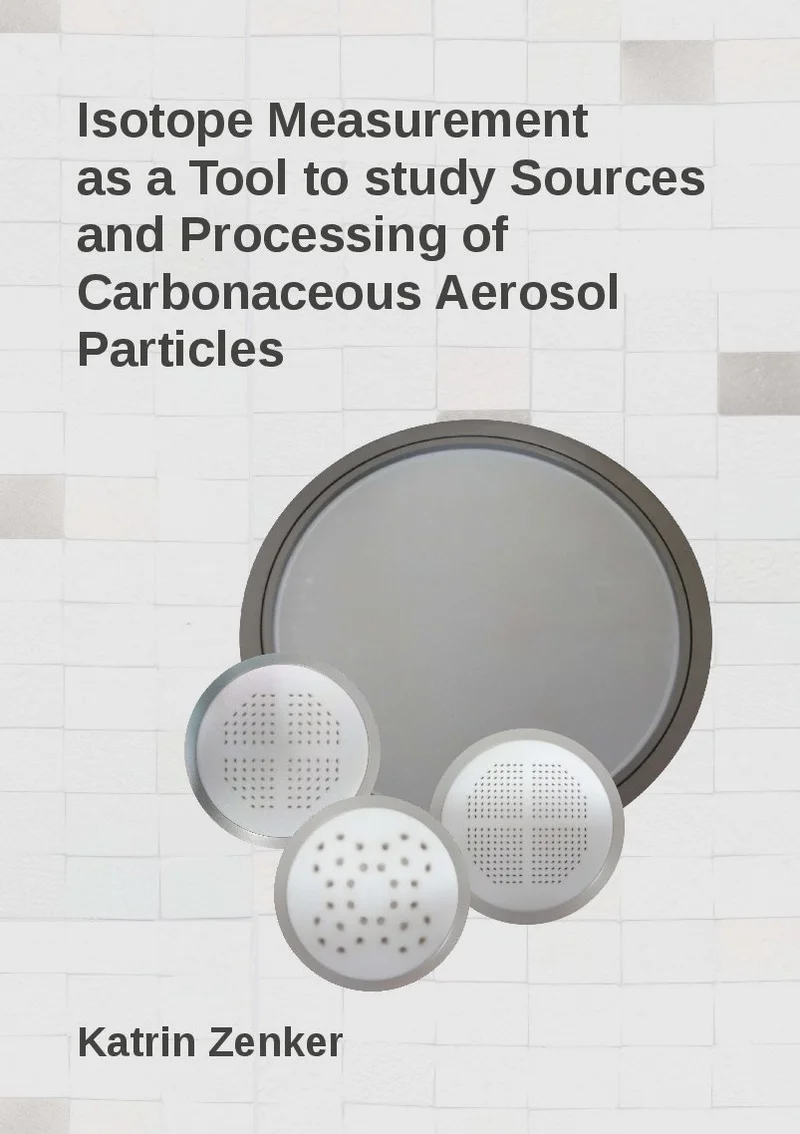
Share this project
Summary
The presented thesis investigates and evaluates two methods for the measurement of carbon isotopes as a tool to study sources and processing of carbonaceous aerosol particles in the atmosphere. Carbon has three natural isotopes: 12C, which is the most abundant; 13C, which, like 12C, is also a stable isotope; and 14C, the least abundant carbon isotope and the only radioactive carbon isotope. Radiocarbon (14C) analysis is an important tool for source apportionment of ambient aerosol particles. In radiocarbon analysis the fraction modern (F14C) of the sample is determined, which enables to clearly distinguish fossil sources (14C-free, F14C is 0) and contemporary sources (14C content is close to atmospheric 14C-level, F14C is close to 1). The measurement of 13C allows to further characterize the aerosol sources, mainly for elemental carbon (EC), because EC is not affected by atmospheric transformation processes. Organic carbon (OC) on the other hand is subject to aerosol aging processes and to the condensation of secondary organic carbon (SOC) onto existing particles, which change the 13C/12C ratios of the particle. The measurement of δ13C (on OC) is therefore an interesting tool to study atmospheric transformations of aerosol particles.
In chapter 2 of this thesis an oxygen-based method for OC-EC separation for 14C analysis is evaluated. Clear physical OC-EC separation is essential in order to perform meaningful radiocarbon analysis, but complicated because incomplete EC recovery can have an influence on the results of the radiocarbon analysis. An essential pre-treatment step for OC-EC separation is the removal of water-soluble OC by water-extraction, because this type of OC is prone to charring. Charred OC is thermally refractive and can therefore be mixed up with EC in the analysis. Our investigations affirm the importance of this pre-treatment step and suggest, that in general water-extraction should be performed routinely for exact EC concentration measurements, especially for highly loaded filters. An implementation of our self-developed thermal protocol for OC-EC separation on a commercial OC-EC analyzer did show poor agreement of the measured EC concentrations, which highlights the importance of instrument-specific parameters, like e.g. the heating rate, and special interest should be paid to these influences when developing new methods. An inter-comparison of F14CEC of four different aerosol filter samples analyzed by our laboratory and two other independent radiocarbon laboratories shows good agreement within the uncertainty estimates. The three methods apply all oxygen-based OC-EC separation and in the future more comprehensive inter-comparison studies are needed, which also include methods that use different approaches for OC-EC separation.
In chapter 3 our in-house method to determine the δ13C value of organic aerosols is presented, the method evaluation is discussed and the measurement method is applied in a source study. The measurement utilizes a temperature protocol, that determines the δ13C values of OC from a filter sample at three different desorption temperature steps (200 °C, 350 °C, 650 °C). The different desorption temperatures correspond to different levels of volatility of the OC-fractions, as at lower temperature more volatile (or less refractory) OC desorbs from the filter and with increasing temperature the desorbed OC is less volatile (or more refractory). The method evaluation shows, that the measured δ13C values of OC are not strongly influenced by charring or isotopic fractionation in the course of the thermal desorption and that the method is independent of the number of used temperature steps. Moreover with the applied calibration approach, long-term regular analysis of an international reference material and repeated measurements of two aerosol filter samples demonstrate a satisfying accuracy and reproducibility of the method. The source study including primary source filter samples (biomass burning, city bus exhaust, traffic emissions in a city tunnel) and ambient filter samples from the region of Naples shows δ13C values of OC that lie within a narrow range and have low variation for the different temperature steps. Therefore source apportionment solely based on 13C signatures is not possible. Nevertheless results add valuable information to a data base for δ13C values of OC for primary aerosol sources, which is rarely measured.
In chapter 4 results of a long-term field study at the northern coast of the Netherlands with impactor sampling depending on two wind sectors are presented. The two different wind sectors represent continental air masses that characterize the European outflow over the relatively clean North Sea on the one hand and air masses coming from the sea and that are influenced by maritime sources on the other hand. Size-resolved mass concentrations of selected inorganic ions, levoglucosan and total carbon (TC=OC+EC) of fine aerosol particles (< 2.5 µm) are shown and discussed. Furthermore the methods, that were evaluated in chapter 2 and chapter 3 were applied to investigate the 14C- and 13C-content of OC. The observed sulfate mass concentrations are similar for filter samples influenced by marine and continental regional air masses, which suggests that ship emissions are an important source for aerosol sulfate in the Netherlands. In general, high values of F14COC show that OC mainly originates from modern sources, such as biomass burning in autumn and winter and the production of SOA from biogenic precursor gases in spring and summer. In addition, similar mass size distributions of TC and levoglucosan in the heating season with higher concentrations compared to the other seasons also indicate that biomass burning for residential heating is an important aerosol source in this rural area in the Netherlands. Nevertheless, the size distribution of F14COC shows lower values for the smallest size range, which is an indication of regional traffic emissions. The measured δ13COC values of the filter samples show, contrary to expected signatures of typical primary sources, distinct changes with particle size and with the different desorption temperature steps (200 °C, 350 °C, 650 °C). At 200 °C δ13COC values are lower compared to the δ13COC values expected for the primary sources with even lower values for the smaller particle sizes. At 350 °C and 650 °C the filter samples show an enrichment in 13C compared to the expected values for primary sources with higher δ13COC sample values for the larger particles. These observations can be explained by aerosol aging as a main processing mechanism for the larger particles and SOA formation that has a larger influence on the smaller particles. In chapter 5 further research topics and general research needs that would improve the knowledge of carbonaceous aerosol are discussed. Mainly, a reference material for aerosol OC and EC as well as more intercomparison studies can improve aerosol carbon measurement methods and enhance comparability between different laboratories and various analytical methods. Furthermore, a comprehensive database for the δ13C values of OC and EC of different aerosol emission sources can help to gain more detailed information for source apportionment of aerosol carbon and to further study atmospheric transformation processes. Additional further research into how aerosol processing changes the δ13C value of OC in a controlled laboratory environment could improve the scientific understanding of atmospheric processing of aerosol particle and help to better characterize and identify these processes in the atmosphere.
Protected: Maxim Hoekmeijer Test