Maxim Hoekmeijer Test
Beyond diagnostic boundaries
27 juni 2025
Protected: Maxim Hoekmeijer Test
Rijksuniversiteit Groningen
Open Ebook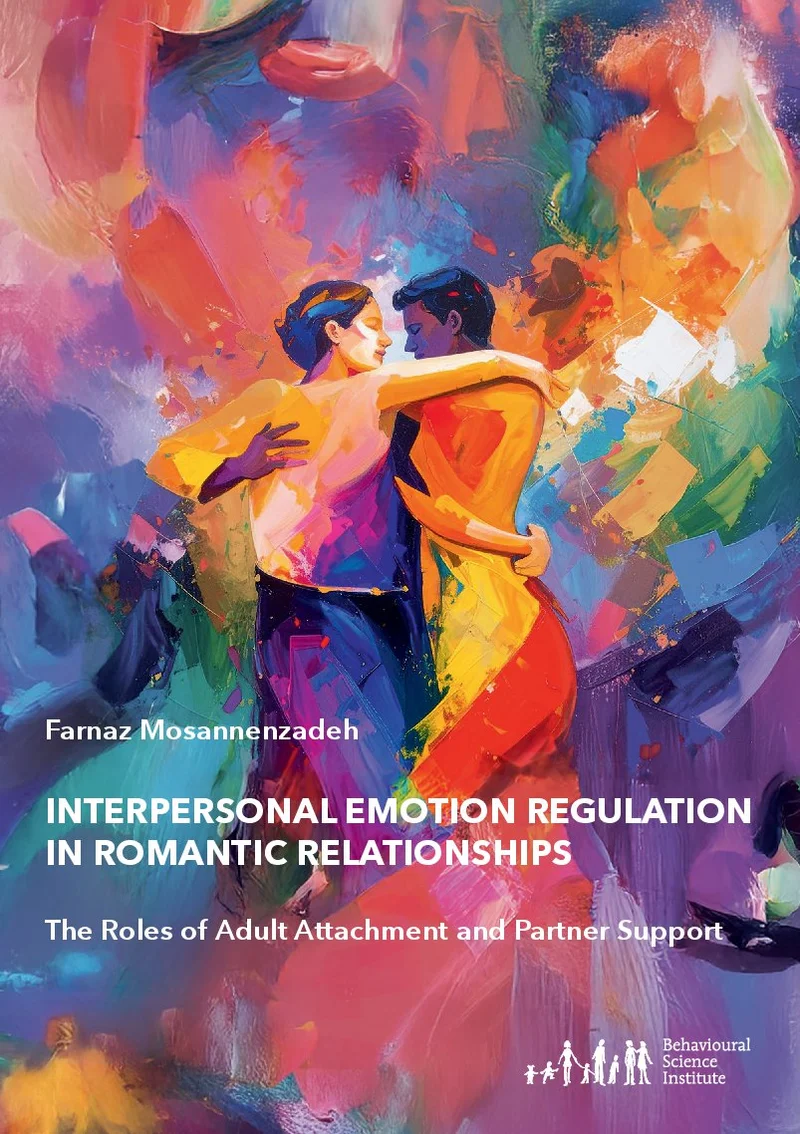
Share this project
Summary
Romantic relationships are a central part of human life, and emotions lie at their core. While emotions—such as love or frustration—and the ways we regulate them, shape the quality of our romantic connection, romantic relationships themselves can provide a safe and supportive context for processing emotions. The processes whereby one regulates their emotions in interaction with their romantic partner are referred to as interpersonal emotion regulation processes. Two key factors shape how we engage in interpersonal emotion regulation with a romantic partner: attachment security—the sense of safety and trust we feel toward our partner—and partner support, both in terms of its quality and quantity. Interestingly, attachment and support may interact to influence emotion regulation patterns. Understanding how these elements work together can help us better navigate emotional life in relationships, ultimately supporting both individual well-being and relationship health.
This dissertation aimed to investigate how attachment and partner support—both independently and in interaction—influence interpersonal emotion regulation processes in romantic relationships. I began in Chapter 1, the General Introduction, by reviewing and integrating key theoretical models from the fields of attachment, social support, and romantic relationships, in order to identify research gaps and to build a theoretical framework for the dissertation. I identified three core research objectives to address three unresolved/unexplored questions in literature, each tapping on one aspect of the overall theoretical framework: (1) to investigate how attachment relates to flexibility in the use of emotion regulation—i.e., the ability to adapt emotion regulation strategies based on situational demands; (2) to investigate the dynamic association between perceptions of partner responsiveness and the use of sharing as an interpersonal emotion regulation strategy; (3) to explore how attachment and partner support interact in shaping emotional outcomes of (interpersonal) emotion regulation. By addressing these research objectives, this dissertation not only advances the field theoretically, but also methodologically: All empirical studies were pre-registered, two chapters employed the experience sampling method (ESM), and one chapter featured a systematic review, ensuring both ecological validity and scientific rigor and transparency.
In Chapter 2, we investigated how adult attachment is associated with flexibility in using interpersonal versus intrapersonal emotion regulation strategies in response to daily stressors. Study 1 used a cross-sectional survey to assess average regulatory tendencies, while Study 2 combined a baseline questionnaire with ESM over one week, measuring momentary contexts and regulatory behaviors multiple times a day. The results showed that individuals with higher (compared to lower) attachment anxiety did not rely more on interpersonal regulation on average, but displayed less flexibility in adjusting their use of interpersonal strategies based on partner availability. In contrast, individuals with higher attachment avoidance underused interpersonal emotion regulation on average; yet showed similar moment-to-moment flexibility as those with lower avoidance, as they adjusted their regulatory behavior to their partner’s availability. These findings demonstrate that attachment orientations are not only distinctively linked to what strategies people use but also to how adaptively they use those strategies across different contexts.
In Chapter 3, we investigated whether perceptions of a romantic partner’s responsiveness when sharing a negative or positive daily experience influenced future sharing behavior. We also explored if this association differed for positive and negative events. Adults involved in a romantic relationship completed an ESM procedure for a period of 15 days, allowing to capture the dynamic processes of their interpersonal interaction with their romantic partner several times a day. Participants who on average found their partner more responsive shared their experiences with their partner more frequently, regardless of the valance of the event. However, momentary perceptions of responsiveness did not consistently predict future sharing—except in one surprising case: occasional dips in responsiveness in a negative event triggered subsequent sharing of a positive event. These findings suggested that both long-term and momentary perceptions of partner responsiveness distinctively influence interpersonal emotion regulation sharing. While overall higher perceived partner responsiveness is associated with more frequent sharing, people may use emotionally positive sharing as a relational repair strategy when responsiveness momentarily declines.
In Chapter 4, we systematically reviewed the empirical research on the interaction between adult attachment and partner support in influencing interpersonal emotion regulation outcomes, namely negative emotions. We were particularly interested to investigate whether and how romantic partner support buffers the detrimental effects of attachment insecurities on emotions. After synthesizing the results of 27 included articles (31 studies; 151 analyses), published between 1969 and 2020, three interaction patterns emerged. First, in a small number of cases (9%), more (compared to less/no) support did buffer the negative emotional effects of attachment insecurity. Second, in a comparable number of cases (10%), more support was paradoxically linked to more negative emotions in insecure individuals. Third, in five percent (5%) of analyses, support was beneficial for secure but not insecure individuals in reducing their negative emotions. However, the majority of cases (76%) showed that higher partner support—particularly when emotionally attuned and perceived by the recipient—was linked to reduced negative emotion, regardless of attachment insecurity. The findings suggest that while partner support often reduces negative emotions, its interaction with attachment insecurity is more nuanced than commonly assumed. These findings call for a more nuanced understanding of when and for whom partner support is effective in regulating emotions.
In Chapter 5, the general discussion of the dissertation, I integrate the main findings to explore how attachment and partner support jointly influence interpersonal emotion regulation processes. I discuss what these findings reveal about the broader theoretical framework introduced in the dissertation and highlight the dynamic and context-sensitive nature of interpersonal emotion regulation in romantic life. I also discuss the theoretical implications for attachment-based and interpersonal emotion regulation research, as well as methodological considerations for future investigations. The limitations of the dissertation are acknowledged, along with suggested directions for future research. Finally, I reflect on how our findings may inform therapeutic practice—particularly in helping couples understand and improve their interpersonal emotion regulation patterns—before concluding the dissertation.
In summary, this dissertation deepens our understanding of how attachment and partner support influence interpersonal emotion regulation in romantic relationships, both regarding stable patterns and in the flow of daily life. The work highlights the importance of flexibility, responsiveness, and nuanced interactions in navigating emotions within close relationships—and offers theoretical, empirical, and methodological contributions to the field of social and relationship psychology.
Protected: Maxim Hoekmeijer Test