
Maxim Hoekmeijer Test
Beyond diagnostic boundaries
27 juni 2025
Protected: Maxim Hoekmeijer Test
Rijksuniversiteit Groningen
Open Ebook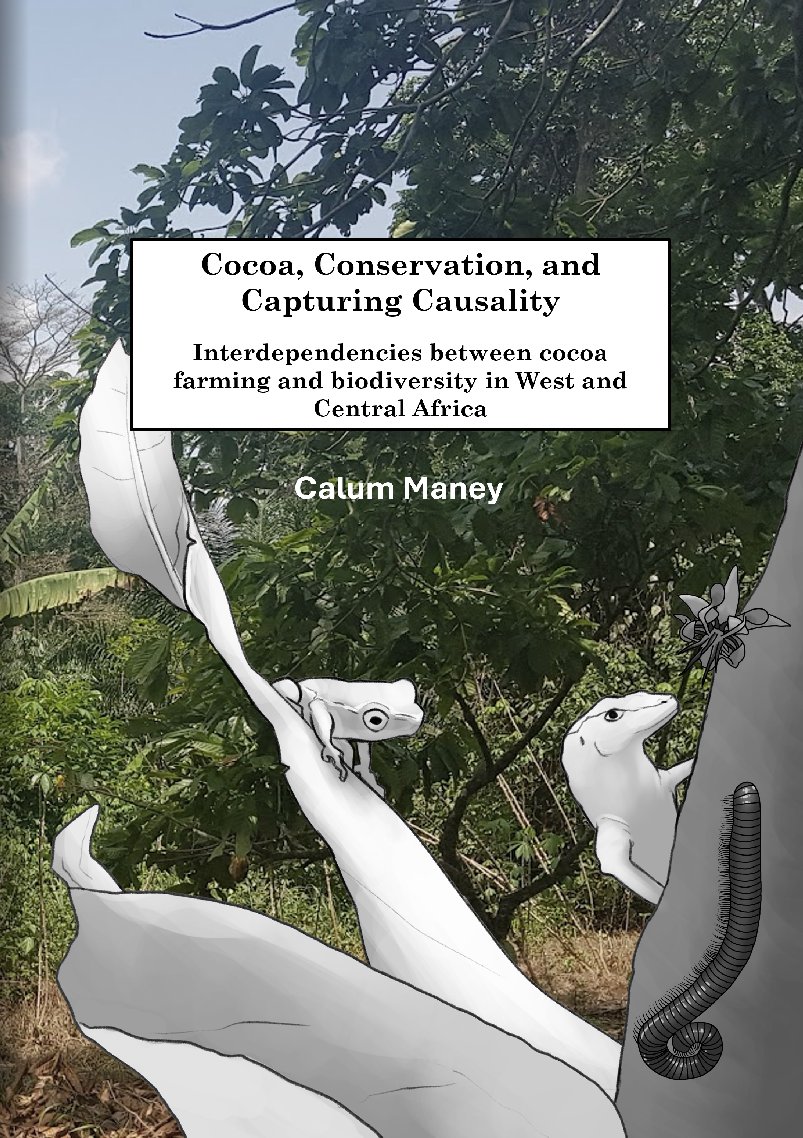
Share this project
Summary
Global agriculture has, over the course of its development, brought biodiversity under more threat than any other driver. Consequently, the ecosystem services that biodiversity provides have increasingly been lost. Sometimes, these losses can be accounted for, or “substituted”. When they cannot be substituted, for intrinsic or contextual reasons, we can consider an agricultural system to be “interdependent” with biodiversity. Interdependencies, and the destructive feedback loops they imply (intensification leads to degradation, leads to a need for further intensification), are grounded in ecological theory, yet it is hard to evaluate if real-world systems are currently experiencing their effects. We can use data to model the effects of land-use on biodiversity, and to model the reliance of agricultural systems on ecosystem services. However, these relationships are very hard to generalise, and context-specific data is required to make confident inferences.
To assess the evidence for interdependencies with biodiversity in commodity crops, I reviewed the relevant literature for evidence for two hypotheses: that commodity crops depend upon specific species groups for their productivity, and that they, by way of expansion or intensification, impact those same species groups (Chapter 2). I studied eight commodity crops: cocoa, coffee, cotton, oil palm, rubber, soyabean, sugarcane, and tea. I examined literature that directly concerns biodiversity and productivity. Overall, I found evidence that most commodity crops both impact and depend on biodiversity, though this was less clear in sugar cane. For some species groups, such as bats in coffee, evidence was more available but less universally positive. Critically, there was clear evidence for the impacts and interdependencies of cocoa systems on plant diversity.
Cocoa has a particularly interesting relationship with biodiversity. Cocoa systems have replaced high-biodiversity tropical forest ecosystems, and so large biodiversity declines across West and Central Africa are attributed to the expansion of the crop across the “cocoa belt”. At the same time, some cocoa systems are themselves fairly diverse with agroforestry that is said to benefit biodiversity and ecosystem services. Despite this potential, cocoa sustainability programmes rarely include a specific biodiversity component.
The remainder of my research focused specifically on cocoa. The variety of cocoa-producing systems globally is large, from simple monoculture systems in full sun to complex, forest-like agroforestry systems with a large density of trees, which support diverse animal communities. To establish a baseline for the typical quantity and variation in “how much” biodiversity cocoa systems can support, I gathered primary data on biodiversity in cocoa systems, also collecting data on other land systems from the same studies (Chapter 3). Following an established framework for estimating the “intactness” of biological communities, I fitted models describing the species richness of sites, and the similarity of community compositional to undisturbed areas. I compared two categories of cocoa agroforestry system, based on whether they had “planted” or “natural” shade. This was used to compare biodiversity intactness between cocoa systems with different land-use histories. I found that cocoa systems are typically similar to secondary forest systems and host more biodiversity intactness than that of open land systems such as cropland and pastures. Planted shade systems and naturally shaded systems had similar species richness, but the community composition differed greatly. Natural shade communities were much more similar to primary forest communities, and were comparable to mature secondary forests in similarity at around 90%. Conversely, a much lower similarity in planted shade systems caused their overall intactness to be 50% or less relative to primary forests. Yet, even planted shade agroforestry systems outperform open-land systems in intactness, showing that where landscapes are already degraded, even simpler agroforestry systems could lead to biodiversity gains.
Context is key to understanding how cocoa production and biodiversity interact. While studies on the impacts of cocoa have typically taken a landscape perspective, I focused on the plant diversity found within cocoa farms for my further research. In order to derive management guidelines to safeguard and enhance biodiversity in West and Central African cocoa systems, it is necessary to understand what drives biodiversity on and off farm (Chapter 4). To do this I developed a “causal model” of how biodiversity responds to driving factors. To test a joint set of hypotheses about how relevant variables may interact, I fitted path models designed to evaluate these against field data from 668 plots on cocoa farms where biodiversity was sampled on cocoa farms in Côte d’Ivoire, Ghana, Nigeria, and Cameroon. I found that while there were important links between farm shade management and tree and understory plant biodiversity, underlying factors such as land-use history, landscape composition, and soil types also governed plant biodiversity on farm.
This also means that the existing base stock of shade and tree diversity must be taken into account to improve biodiversity on cocoa farms, as well as underlying factors that may have influenced this biodiversity in the past. The most impactful actions to take differ based on spatial context, the history of a farm, and the number and type of trees currently present (remnant, spontaneous recruits, or planted trees). One key variable that dominated biodiversity patterns, as well as patterns in other causal factors such as vegetation structure, was the distance of a site to the nearest port. Taken as a proxy for the overall intrusion of human activities into a landscape, this shows how different strategies are necessary across the range of variation in areas in West and Central Africa. In Nigeria, where typical farms have only one or two species of planted tree, allowing spontaneous recruits on farms would enhance biodiversity both in trees (clearly) and in the understorey, especially if spontaneous recruits are allowed to grow to large sizes. However, in areas such as Cameroon, retaining remnant trees is the most impactful action, especially in the face of increasing land conversion and landscape accessibility in the region.
I found that the minimum requirements for a range of current sustainability standards in cocoa are insufficient to protect existing plant diversity. This was because tree density and diversity were already much higher in most contexts than required to meet sustainability criteria. Nigerian farms were the only context in which this was not the case. I suggest that new criteria that are focused explicitly on biodiversity impacts are needed to preserve the additional biodiversity on farms, as well as to recognise and reward it.
The most appropriate actions for improving biodiversity on a cocoa farm also depend on the ecosystem services that biodiversity can provide. This is the most important factor when it comes to designing biodiversity-friendly cocoa that is both ecologically and economically sustainable. To assess how farmers perceive trees, tree communities, and the ecosystem services they provide, I carried out a detailed analysis of the benefits and trade-offs associated with trees on cocoa farms (Chapter 5). Traits of individual trees were somewhat predictive of their usefulness to farmers, as well as their likelihood of certain trade-offs being associated with them. For example, while trees with large canopies were considered good for shading cocoa, they were also more likely to be perceived as contributing to pest and disease outbreaks. Other patterns pointed to special traits of certain trees: for example, nitrogen-fixing trees were associated with fertility benefits, but were unlikely to be considered useful for medicine. Using the predictive power of tree traits can help to design sustainable cocoa systems, for instance by providing saplings of trees with traits considered useful for filling gaps in ecosystem services perceived by farmers.
I also fitted general additive models (GAMs) describing how farmers respond to the composition, structure, and functional diversity of trees on cocoa farms in terms of the ecosystem services they provide. At the farm level, having more trees, and larger trees, was linked to perceptions about cocoa systems providing construction services, areas to rest and relax, and future security. Farms with fewer fruiting trees were perceived as contributing more to food security and marketable goods.
Finally, I compared the traits of tree communities to plot-level data on cocoa yields to examine if there were relationships between tree diversity and productivity on cocoa farms in the region, beyond that which is already well established (i.e. that a shade cover of 30-40% is optimal for productivity). Within the bounds of 30-40% shade cover, the density of trees needed to achieve the largest cocoa yields of around 700 kg ha-1 depended on the diversity of the trees. When tree community evenness was low (more of the same types of tree), sparse tree density of around 20 trees ha-1 was expected to achieve the largest yields, but when the evenness was higher (a more diverse spread of more types of tree), the largest yields were predicted to occur with greater densities up to 100 trees ha-1. In all cases, larger trees were more effective in providing larger yields. I use these findings to suggest that a “one size fits all” approach to sustainable agroforestry design is unlikely to maximise yields and other ecosystem services in all situations, so a context-appropriate method to enhancing biodiversity and ecosystem services on farms would be a better approach to sustainable cocoa production. Most biodiversity, ecosystem service, and yield benefits are associated with large trees, which can take over 30 years to reach maturity (and usefulness). As cocoa systems have a productive lifespan of 25-30 years, this means that shade management needs to be multi-generational to be effective.
My general discussion (Chapter 6) builds on the strong interdependence of plant biodiversity and the multiple uses and benefits of cocoa systems. The design and underlying context of cocoa farms is key to understanding both the baseline degree of biodiversity on farms, and how to improve it for both conservation and ecosystem services, including cocoa yields. Combining insights from top-down, global-scale models with models grounded in field work shows the necessity of both, while acknowledging that only the field-based models can effectively guide specific actions on farms and, in doing so, can add nuance to potentially oversimplified global views of biodiversity. Cocoa systems have value for biodiversity conservation, though this value is governed by local context. Despite wider trends of unsustainable tree use in West Africa, cocoa farms may be using trees sustainably. Diverse cocoa systems are thus an important part of the West Africa’s conservation estate and contribute to global biodiversity goals. Current standards fail to take into account the diversity of contexts governing biodiversity and ecosystem services in cocoa systems, so new standards to protect biodiversity are needed. The protection and continuous supply of large trees, which are disproportionately valuable to farms, should be a key target of future standards for ecologically and economically sustainable cocoa. Current import regulations such as the EU anti-deforestation regulation (EUDR) fall short for cocoa systems: the false-positive detection of agroforestry systems is a major shortcoming of existing data-driven approaches to preventing commodity-linked deforestation in West and Central Africa. Practice, governance, and private sector priorities all need to shift to reflect the nuanced, carefully-implemented changes needed to provide cocoa that halts and reverses biodiversity loss and that provides for local communities in a way that is robust and resilience in the face of climate change.
Protected: Maxim Hoekmeijer Test