
Maxim Hoekmeijer Test
Beyond diagnostic boundaries
27 juni 2025
Protected: Maxim Hoekmeijer Test
Rijksuniversiteit Groningen
Open Ebook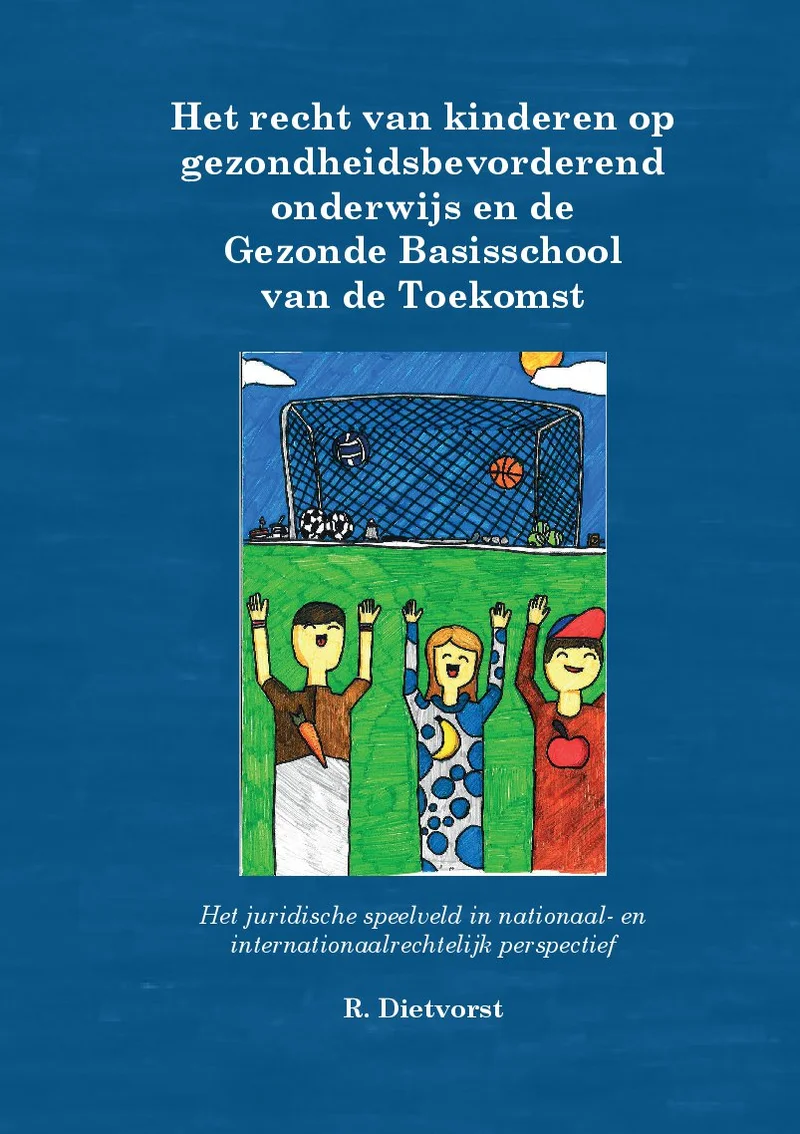
Share this project
Summary
A healthy lifestyle is essential to safeguarding population health. Nonetheless, in numerous Western countries, including the Netherlands, there is an observable rise in the prevalence of unhealthy lifestyle patterns among both adults and children. This development is largely attributable to obesogenic environments, which actively promote behaviours detrimental to physical well-being. As a result, the number of people affected by overweight and obesity in the Netherlands continues to rise, leading to significant public health consequences. Reversing this trend requires the implementation of multiple preventive health measures.
This study examines one of the potential interventions aimed at reversing current trends: the implementation of health-promoting education in the Netherlands. In 2015, the Dutch initiative ‘De Gezonde Basisschool van de Toekomst’ (The Healthy Primary School of the Future, hereafter GBvdT) was launched, serving as the impetus for this research. The GBvdT project examines whether primary school children who are offered a structured daily routine, with sufficient time allocated for physical activity and attention to healthy nutrition, experience enhanced emotional, intellectual, and physical development compared to their peers in conventional educational settings. A health-promoting school, such as the GBvdT, constitutes a preventive measure designed to improve pupils’ health and positively influence their behaviour. This approach also entails a legal dimension.
This study focuses on the legal implications of implementing health-promoting education in the Netherlands, specifically through the model of the health-promoting school, such as the GBvdT. Legal questions arising from the implementation of such a programme in publicly funded schools lie within the framework of education law, and partly within the domains of human rights and constitutional law. These questions necessitate a legal analysis of the existing regulatory scope and potential legal obstacles that arise with the implementation of the health-promoting school.
Currently, Dutch law does not impose a statutory obligation on schools to offer health-promoting education or to adopt a healthy school approach. Schools therefore retain discretion in deciding whether to implement such a model. However, if a school voluntarily adopts a health-promoting approach, or if the legislature opts to mandate it, tensions may arise between competing interests. Accordingly, this research also examines which interests may come into conflict and how such conflicts ought to be balanced from a legal perspective.
The central research question addressed in this study is twofold: To what extent does the child’s right to health encompass the right to healthy development, particularly within the school context, and what obligations does the Dutch State bear in this regard? Furthermore, what rights and interests do schools, parents, and children have in realising the child’s right to health within education, and how do these rights and interests relate to the State and to one another when introducing a statutory obligation for health-promoting education?
To address the research questions posed in this study, the investigation is structured as follows. The first part of the research (Chapters 3 through 5) presents an analysis of the right to health, with particular attention to the measures adopted by the Netherlands to combat lifestyle-related diseases among children. This section centres on the question: What does the international and national right of the child to health and healthy development entail, and what are the obligations of the Dutch state with regard to the child’s right to health?
The treaty provisions examined in Chapters 3 to 5 (Article 12 of the International Covenant on Economic, Social and Cultural Rights and Article 24 of the Convention on the Rights of the Child) are analysed using the dynamic interpretation method, which treats treaties as ‘living instruments’ (see Chapter 2). Drawing on a range of sources, including case law, general comments issued by monitoring bodies (the ICESCR Committee and the Committee on the Rights of the Child), and legal scholarship, these provisions are systematically interpreted in light of contemporary conditions and societal developments.
In addressing the question of what constitutes the national legal framework concerning the child’s right to health and healthy development, this study examines Article 22(1) of the Dutch Constitution and interprets it in light of its legislative history. In addition, several judicial decisions, including the Urgenda judgment, are analysed to assess the considerations the Dutch State must weigh in the context of preventive health measures and the protection of public health, particularly in relation to the growing prevalence of obesity and overweight in the Netherlands. The analysis also draws on a range of supplementary sources, such as policy documents and agreements issued by the Dutch government.
Following the analysis of the international and national legal frameworks governing the right to health and prevention, the focus of the study shifts (in Chapters 6 and 7) to the potential for implementing health promotion in education as a preventive strategy. The initial emphasis lies on international law, exploring the extent to which it recognises health promotion within educational settings and whether it imposes corresponding obligations on States. This leads to the formulation of the following sub-question: What obligations can be attributed to the state in realising the rights of the child to health within the context of primary education?
To answer this sub-question, the study once again applies the dynamic treaty interpretation method to examine Article 2 of Protocol No. 1 to the European Convention on Human Rights, Article 13 of the International Covenant on Economic, Social and Cultural Rights (ICESCR), and Articles 28 and 29 of the Convention on the Rights of the Child (UNCRC). The analysis is grounded in the international legal framework governing the right to education and educational content, as well as in the UNCRC and the recommendations issued by various human rights committees and organisations concerning health-promoting education.
Subsequently, the study transitions from the international legal framework to the Dutch context, outlining how health-promoting education is currently regulated in the Netherlands and examining the role of Dutch primary education in promoting children’s health. The central question addressed in this section is: What is the current role of Dutch primary education in promoting children’s health, and what are the existing legal possibilities within the Dutch education system to support a child’s healthy development?
This analysis focuses on the responsibilities of public and denominational schools in the Netherlands in preventing lifestyle-related conditions such as overweight and obesity among children. It further explores Dutch education law for implementing health-promoting education, including initiatives such as the GBvdT. To answer this question, the study draws upon legal scholarship, policy documents, and relevant case law.
The third and final part of the study (Chapters 8 and 9) considers the scenario of introducing statutory provisions for health-promoting education in the Netherlands. Chapter 8 presents Scotland as a case study for comparative legal analysis. Scotland was selected due to its statutory requirement for all schools to incorporate health promotion into the curriculum. Legislative measures have also been adopted to improve the nutritional quality of school lunches and to encourage the consumption of healthy meals. Schools in Scotland fulfil a significant societal role, and health promotion is firmly embedded within the educational framework. This chapter therefore identifies the lessons that may be drawn from the Scottish example, describing the relevant education law, statutory instruments, and the manner in which health promotion is integrated into the school system. The guiding question is: What lessons can be learned from the legal implementation of health-promoting education in Scotland?
To address this research question, a study visit was conducted in 2017 at the University of Edinburgh. Through legal literature review and interviews with Scottish experts in the fields of children’s rights, family law, and education law, valuable background information was gathered, which is presented in Chapter 8. In addition, policy documents were consulted to gain a clearer understanding of the current interpretation of legislation and to provide legal analysis.
Chapter 9 explores a potential future scenario involving the introduction of a statutory obligation to provide health-promoting education in the Netherlands. This chapter examines how such a legal obligation might be structured and considers the extent to which it could give rise to conflicts with the interests of schools, parents, and pupils, as well as how such conflicts might be resolved.
Chapter 9 addresses two core research questions: (1) What rights and interests do schools, parents, and children have in the realisation of the child’s right to a healthy development within the school context, and how do these rights and interests relate to the state and to one another in the context of introducing a statutory obligation for health-promoting education? And (2) How can health-promoting education be legally embedded in the Netherlands, and how can potential legal or practical obstacles be addressed?
Chapter 9 examines four potential legislative models through which the Dutch education legislator could mandate health-promoting education: (1) the formulation of a statutory duty of care, (2) the formulation of a legal educational mandate, (3) curriculum reform, and (4) the adoption of selected measures from the Scottish model. Particular attention is given to identifying which Scottish measures may be relevant and transferable to the Dutch educational context.
A statutory obligation to implement health-promoting education inevitably affects the rights and interests of schools, parents, and pupils. Accordingly, Chapter 9 presents a tripartite balancing of interests to assess the legal permissibility and desirability of such a legislative measure. The first assessment, focused on the interests of schools, concludes that the legislator may impose health-promoting obligations, provided this occurs within the boundaries of Article 23 of the Dutch Constitution, which safeguards the freedom of education. Not all societal concerns may be assigned to the educational domain without due consideration, and the legislator must evaluate whether such measures infringe upon educational autonomy. While international law does not prohibit mandatory health promotion in schools, it does require a careful assessment of necessity, proportionality, and subsidiarity. The extent to which educational freedom is impacted depends on the specific legislative form adopted and its substantive content. Based on the findings of this study, a statutory duty of care (1) or a legal educational mandate (2) appears to be the least intrusive and most legally defensible options.
The second assessment, centred on parental rights, demonstrates that a statutory obligation for health-promoting education may interfere with parental rights under Article 8 of the European Convention on Human Rights and Article 1:247 of the Dutch Civil Code. However, such interference may be justified if it serves to protect children’s health. The legislator must carefully consider parental beliefs when designing health-promoting education, while retaining policy discretion to address pressing public health concerns such as childhood obesity. A statutory duty of care aligns most closely with current practice and poses the least conflict with parental rights under Article 2 of Protocol No. 1 to the ECHR, particularly if the school’s participation council (medezeggenschapsraad) is granted a formal role in policy development, thereby ensuring parental perspectives are incorporated and public support is fostered.
The third assessment, focusing on children’s rights, demonstrates that health-related measures may affect various fundamental rights of the child, including the right to freedom of expression (Article 13 UNCRC), the right to freedom of religion and belief (Article 14 UNCRC), as well as the right to privacy, physical and mental integrity, and personal autonomy (Articles 10 and 11 of the Dutch Constitution). This assessment further reveals that a statutory duty of care or curriculum reform would only minimally interfere with these rights.
The converse is also addressed: health-promoting education actively contributes to the realisation of children’s rights under the UNCRC, such as the rights to health, nutrition, and participation, and enhances children’s autonomy by equipping them with relevant lifestyle information.
Finally, based on the analysis presented in Chapters 1 through 9, Chapter 10 provides an answer to the central research question. The key findings are as follows. The right to health, as enshrined in Article 12 ICESCR and Article 24 UNCRC, obliges States to take all appropriate measures to protect children’s health, including preventive interventions targeting lifestyle-related diseases such as overweight and obesity. Article 12 ICESCR requires States to respect, protect, and fulfil the right to health, which entails the development of a national health strategy and the safeguarding of access to essential services, with particular attention to vulnerable groups, including children.
Article 24 UNCRC recognises the child’s right to the highest attainable standard of health and mandates States to adopt suitable measures in the areas of prevention, health promotion, and access to care. The Committee on the Rights of the Child applies a broad and dynamic interpretation of this right, encompassing lifestyle-related conditions. States are encouraged to implement policies that promote healthy nutrition, physical activity, and health education, and to regulate child-targeted marketing. Moreover, States are expected to actively foster a healthy environment for children, with meaningful involvement of parents and due respect for their primary caregiving role, as stipulated in Articles 5 and 18 UNCRC.
Dutch national law does not explicitly recognise a right to health for children. Although Article 22(1) of the Dutch Constitution obliges the government to promote public health, it does not provide concrete or enforceable standards and grants the legislator considerable discretion. Consequently, the international human rights framework, particularly Article 12 ICESCR and Article 24 UNCRC, plays a crucial role in compelling States to adopt preventive and health-promoting measures, including those targeting lifestyle-related conditions such as obesity.
The analysis presented in this dissertation demonstrates that, to date, the Dutch government has predominantly relied on non-binding policy instruments, such as the National Prevention Agreement, covenants, and subsidies, rather than enacting binding legislation. Evaluations indicate that these measures have yielded insufficient results, as the prevalence of overweight individuals continues to rise.
Dutch education law does not contain statutory provisions granting children a right to health-promoting education. Nor are schools legally obligated to provide such education or to implement measures aimed at preventing overweight and obesity among children. From a legal standpoint, schools currently play no formal role in the realisation of the child’s right to health. Although the Primary Education Act includes the promotion of healthy behaviour as an educational activity, this provision has never been substantively developed by the legislator. Nonetheless, publicly funded primary schools in the Netherlands retain considerable legal discretion to shape health-promoting education according to their own vision, should the school’s governing body choose to do so. Since the enactment of the ‘More Room for New Schools Act’ (Meer ruimte voor nieuwe scholen), it has become possible to establish a health-promoting concept school.
International law and jurisprudence, however, require the State to adopt appropriate, proportionate, and effective measures in response to genuine health risks, particularly when such risks threaten the life and well-being of citizens. Based on the analysis conducted, this dissertation concludes that the current approach is inadequate and that the government is failing to fulfil its responsibilities. There is a clear impetus for more robust measures, including legislation, in which schools could assume a more prominent role in health promotion. The responsibility for a healthy lifestyle can no longer rest solely with the individual, especially not with children, who require additional protection and guidance.
A statutory obligation for health promotion in schools could contribute to the realisation of the rights to health and nutritious food, provided that the fundamental rights of schools, parents, and children are duly considered. It is at the discretion of the State to adopt such measures.
Should the Dutch legislator decide to legally mandate all schools to assume a health-pro moting role, the Scottish model offers valuable insights and reference points for the design and implementation of such a policy. Nevertheless, the legislator must take into account the interests of schools, parents, and pupils when introducing a statutory obligation. Based on the balancing of interests discussed in Chapter 9, this dissertation concludes that the legislator has sufficient scope to enact legislation on health-promoting education without necessarily infringing upon the constitutional freedom of education (Article 23 of the Dutch Constitution), parental rights under Article 2 of Protocol No. 1 to the ECHR and Article 8 ECHR in conjunction with Article 1:247 of the Dutch Civil Code, or the rights of children. The extent to which such legislation affects these rights depends on its specific formulation. This study finds that a statutory duty of care within the Primary Education Act represents the most appropriate and balanced measure for regulating health-promoting education in the Netherlands. Such a provision would require schools to make reasonable efforts without unduly restricting their autonomy or educational freedom, while also allowing space for parental involvement and a child-centred approach. This model best accommodates the interests of all stakeholders involved.
Protected: Maxim Hoekmeijer Test