
Maxim Hoekmeijer Test
Beyond diagnostic boundaries
27 juni 2025
Protected: Maxim Hoekmeijer Test
Rijksuniversiteit Groningen
Open Ebook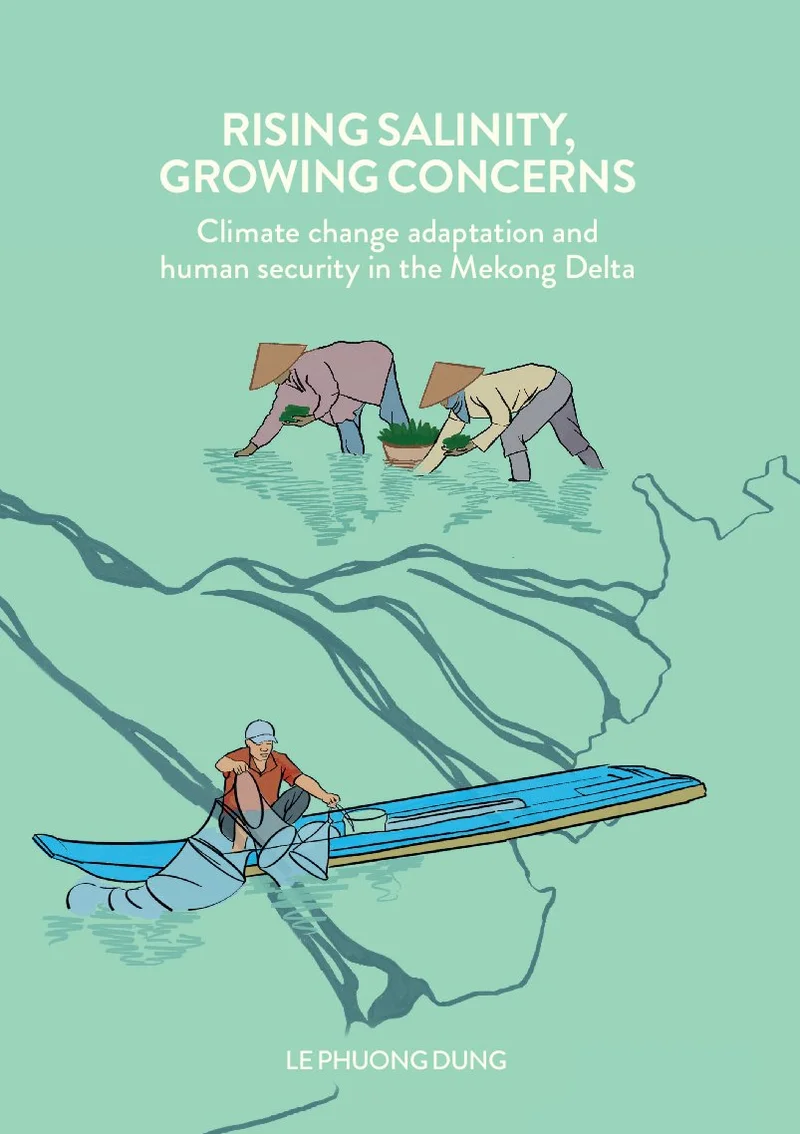
Share this project
Summary
Climate change and sea level rise pose increasing threats to agricultural livelihoods and human security, especially in vulnerable delta regions like the Vietnamese Mekong Delta (MKD). The Mekong Delta, located in southern Vietnam and the most downstream area of the Mekong River, is one of the world’s most vulnerable regions to climate change impacts. The region is also characterized by biologically productive ecosystems that are beneficial to crop and aquacultural production. The MKD contributes to 50 percent of Vietnam’s total rice production, 65 percent of aquacultural production, and 70 percent of fruit production. However, climate change and unpredictable weather patterns contribute to decreasing crop yields, reducing livestock production, and increasing pest and disease outbreaks in the MKD. These agricultural production failures not only threaten food security but also create several economic and social pressures, such as income losses and forced migration. To minimize the negative consequences of climate change and extreme weather events, different climate adaptation strategies have been implemented at all levels, from global and national to individual. Nevertheless, understanding the complexities and uneven impacts of climate change and adaptation remains a critical challenge for both research and policy.
This thesis asks: How do climate change and adaptation strategies affect livelihoods and social dynamics in vulnerable rural communities in the Mekong Delta, and how can a human security lens enhance our understanding of these impacts? The research aims to examine the heterogenous impacts of different climate adaptation activities on farmers’ livelihoods in rural Mekong Delta, explore what factors can potentially bring conflict risks during the climate adaptation process, and apply a human security lens to more holistically understand the climate change and adaptation impacts.
The study first assesses how planting date adjustments as an adaptation strategy mitigate the adverse effects of salinity intrusion in the MKD (Chapter 2). Government agencies in the region annually issue recommended planting calendars for rice production based on hydro-meteorological forecasts to help farmers avoid critical salinity windows and improve rice productivity. The study used a unique combination of various datasets, including a three-wave panel survey of 775 rice-farming households in salinity-prone districts, the salinity level measured at stations, the satellite precipitation data, and the governmental planting date calendar. For the analysis, we employed a two-stage random effects panel regression and instrumental variable approach to control for unobservable heterogeneity. The results show that adherence to the planting calendar recommendations is positively associated with higher yields and profits; however, this benefit is concentrated among fields protected by salinity barrier gates. For fields outside gates where salinity impact is stronger, planting date compliance shows no significant benefit. This suggests that uniform recommendations may fail to address local environmental complexities, and further highlights the importance of tailoring adaptation recommendations to reflect the diverse infrastructural and ecological conditions in vulnerable agricultural landscapes.
Chapter 3 studies the adoption of salinity-tolerant rice varieties (STV) (intensive adaptation) and farmers’ decision to abandon rice production (extensive adaptation). Using a panel dataset of 788 households, the analysis applied fixed-effects regression and probit models to evaluate the performance of STV and to analyze the drivers behind the exit from rice production. STV usage shows higher yields inn fields without salinity barrier gates, but not in fields with salinity barrier gates. These results imply that STV benefits may be greater in unfavorable environments with higher salinity risk, however there is weak evidence that this yield benefit can translate into higher profit due to STV’s lower market price. In terms of extensive adaptation, approximately 15% of rice fields were abandoned over the short study period. The decision to cease rice farming is influenced by the presence of salinity barrier infrastructure, farm size, and the strength of community commitment to rice cultivation. On the one hand, this chapter again suggests the importance of tailoring adaptation strategies to local environmental conditions and infrastructure availability. On the other hand, it reveals farmers’ rapid land use change in response to economic opportunities and environmental stresses. Thus, appropriate economic incentives, as well as technical assistance, will be crucial for lowering farmer costs of extensive adaptations in heavily impacted salinity prone areas.
Next, the fourth chapter shifts focus from yield and economic impacts of adaptation to the social dynamics emerging from collective adaptation decisions. Particularly this study explores the potential for conflict arising from unequal decision-making power and opportunity costs. Departing from a classical inequality aversion model suggested by Fehr and Schmidt (1999), the study integrated the concept of agency, defined as an agent having the decision-making power over their adaptation choice, and the opportunity cost, defined as the distance from the agent’s best alternative, to explore conflict risks. Lab-in-the-field experiments and surveys with 360 farmers were conducted in two MKD provinces. The behavioral experiment combined an Investment Game and a Joy of Destruction Game to simulate scenarios where farmers face different collective adaptation scenarios. This study used destructive behaviors as a proxy for conflict risks in the context of rural adaptation to climate change. Results demonstrate that farmers lacking agency are more likely to engage in destructive behaviors, especially when they experience higher opportunity costs. This finding suggests that conflict risks may emerge as part of the adaptation process when involved agents have unbalanced decision-making power and different perceived opportunity costs. The chapter calls for empowering farmers in decision-making regarding climate change adaptation strategies to minimize social tensions and conflicts.
Chapter 5 applies the human security lens to explore the broader implications of climate change and adaptation. Human security, with its four principles of people-centered, comprehensive, context-specific, and prevention-focused, offers a multidimensional and holistic approach to climate change adaptation. A scoping literature review and in-depth interviews with farmers, officials, and community leaders in the MKD were conducted. The finding reveals that stronger focus has been given to economic and food security in the Mekong Delta, while concerns related to social and personal security receive less attention. While adaptation measures aim to reduce vulnerabilities, they may inadvertently exacerbate insecurities or generate new risks. For example, infrastructure investments or top-down policies that favor certain crops can restrict livelihood options and lead to social tensions, threatening personal and political insecurities. The chapter advocates for a holistic human security approach in adaptation planning to take into account potential human insecurities and avoid the risk of maladaptation that can lead to grievances and conflict risks.
The sixth chapter makes an initial effort to operationalize this human security approach by developing a Rural Human Security Index (Rural HSI), adapted from the urban his by Adger et al. (2021), to capture unique challenges faced by rural delta populations. Using survey data from both the Mekong Delta and Hatiya Island in Bangladesh, the study measured the perceived human security and its economic, social, and environmental dimensions and explored how these relate to exposure to climate hazards and human mobility. The findings indicate that some demographic factors, such as income and education, play significant roles in determining the perceived human security levels in both Bangladesh and Vietnam. We do not find a significant relationship between human security levels and mobility conditions, possibly due to the complex and multifaceted nature of this relationship. Sudden-onset hazards like cyclones and floods consistently reduce perceived security, particularly for households with members who have migrated away. Slow-onset hazards, including salinity intrusion and drought, have complex effects in different contexts. In Bangladesh, slow-onset hazards are positively associated with human security for both mobile and immobile households, while in Vietnam, they negatively affect human security, particularly for mobile households. These findings highlight the importance of context-specific approaches when analyzing the interactions between climate change, human security, and mobility. The Rural HSI might serve as a valuable tool for policymakers to monitor adaptation effectiveness and target support where vulnerabilities are greatest.
This thesis integrates different qualitative and quantitative methods and uses diverse data sources to explore the complex interactions between climate change, adaptation, and human security in rural communities. It advances the understanding of climate adaptation behaviors in the Mekong Delta of Vietnam by revealing various drivers and heterogeneous effects of different adaptation strategies. While some adaptation strategies, such as planting date adjustments and salinity-tolerant varieties, provide benefits, their effectiveness is highly dependent on local environmental conditions and infrastructure. The study also highlights the risks of unintended consequences, such as sparking conflicts between different farming systems, especially when adaptation strategies are not implemented with a thorough understanding of local dynamics. In addition, the research suggests evaluating climate adaptation efforts more holistically by adopting a human security approach. The use of a human security lens has shown that while adaptation strategies may improve certain aspects of security, they can inadvertently introduce new insecurities, particularly in areas with limited infrastructure or resources.
The study emphasizes the need to integrate environmental heterogeneity, conflict-sensitive adaptation planning, and multidimensional human well-being into both research and policy frameworks. Effective adaptation policies must move beyond one-size-fits-all solutions to embrace tailored strategies that carefully consider the local conditions, empower marginalized voices in decision-making, and address more holistically different dimensions of human insecurity.
Protected: Maxim Hoekmeijer Test